
RESOLVING THE LEDGER
RESOLVING THE LEDGER
Only one outlet has reported this event so far — you're reading it below, credited to its source. AIPROPX is tracking the web for more coverage; as additional outlets confirm it, this becomes a full multi-source story automatically.
By AIPROPX Editorial Desk · Published · Updated
One outlet is reporting this so far. AIPROPX is tracking it and will gather every additional source as it develops — the full multi-source comparison appears automatically once a second outlet confirms it.
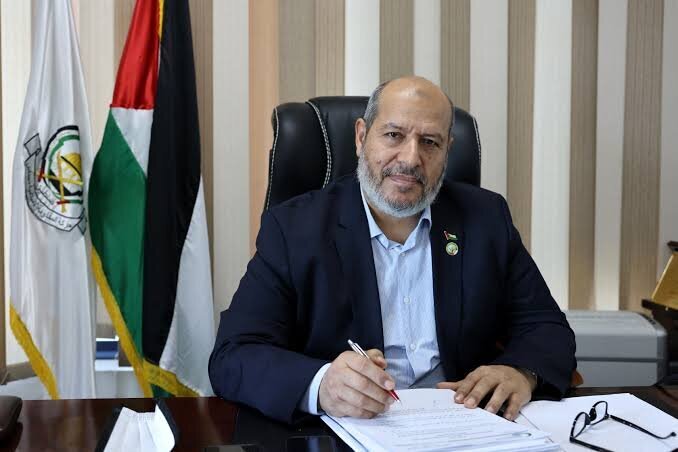
TEHRAN – Hamas ran a leadership vote in the middle of ethnic cleansing and ongoing genocide. The outcome was close, the turnout was real, and the process followed its own rulebook to the letter. That alone is worth pausing over.
Holding a contested internal election while a genocidal campaign rains down on your population is, by any measure, an act of institutional audacity. It forces the movement to balance secrecy with transparency, speed with deliberation, and survival with legitimacy, all while its members dodge airstrikes.
In that brutal calculus, the vote isn’t just about picking a chief; it’s about refusing to let external annihilation dictate internal order. It undeniably transforms democracy into a weapon, one exercised not to win international applause, but to hold the organization together.
Hamas elected Dr. Khalil al-Hayya as head of its political bureau, succeeding Yahya Sinwar and Ismail Haniyeh, who were assassinated by the Zionist occupation regime. Al-Hayya secured the confidence of the movement’s Shura Council by a narrow margin over Khaled Meshaal, Hamas’s leader abroad.
Under Hamas’s internal electoral rules, a candidate must receive 50 percent plus one vote to win the presidency. Neither candidate reached the required threshold in the first round, making a second round of voting necessary.
The current election recalls a similar contest in the movement’s previous Gaza regional leadership elections, which had to be repeated several times before Yahya Sinwar narrowly defeated Dr. Nizar Awadallah.
Elections amid assassinations and genocidal war
These elections carry particular significance in light of the dramatic developments affecting the Palestinian cause, the resistance, and Gaza in particular since the launch of Operation al-Aqsa Flood.
The movement has demonstrated considerable institutional resilience by successfully holding internal elections across its three organizational regions, Gaza, the occupied West Bank, and abroad, despite repeated assassination campaigns that have claimed many of its political, security, and military leaders.
The threat of assassination continues to shadow the movement’s leadership and cadres, including al-Hayya himself, who survived an assassination attempt in Qatar. This remains a major challenge to Hamas’s political and organizational stability.
At the same time, these developments are evidence of the Israeli regime’s failure to undermine Hamas’s institutions or create internal chaos and disarray. Al-Hayya’s election also reaffirms Gaza’s central leadership role within the movement and its continued ability to shape Hamas’s strategic direction, political decisions, and future policies.
From a strategic perspective, Khalil al-Hayya’s election consolidates the course charted by the movement’s previous leaders, Haniyeh and Sinwar. That approach maintained close ties with Iran and the Axis of Resistance while preserving strong relations with Qatar and Turkey and cultivating partnerships with influential states such as Egypt, Algeria, Russia, and China.
These policies earned the confidence of a broad range of regional and international actors, and al-Hayya’s election is expected to reinforce this balanced approach to foreign relations.
Conversely, his defeat would have been viewed by some parties as a departure from that principle of balance.
On the Palestinian national level, al-Hayya was among the leading figures who supported the policies pursued by Haniyeh and Sinwar, which produced an unprecedented revival of coordinated national action, particularly in the Gaza Strip.
The movement presented what it viewed as a distinctive model of national cooperation, reflected in joint action across numerous milestones. Among the most significant were the Great Return Marches of 2018, their shared political positions on elections, national reconciliation, and the future of the Palestine Liberation Organization, as well as coordinated military resistance through the establishment of the Joint Operations Room, which brought together twelve Palestinian resistance groups.
These groups participated in defending Gaza during the U.S.-backed Zionist regime’s genocidal war and demonstrated an exceptional example of resistance, sacrifice, and steadfastness.
The election of Khalil al-Hayya carries symbolism that is difficult to ignore. He is a son of Gaza, which has endured, and continues to endure, genocide and ethnic cleansing, transforming it into the focal point of global events and a measure of moral conscience and human values.
Within Hamas’s leadership, al-Hayya is seen as reflecting Gaza itself. His family, including his sons, daughter-in-law, and grandson, were among those killed in the genocidal war, while those who survived were displaced across the Strip, moving from one tent to another through successive waves of displacement.
Like the rest of the Gaza population, they experienced hunger, thirst, scorching heat, and bitter cold. Under the current circumstances, many in Gaza would find it difficult to accept any other choice of leader.
In the public imagination, Khalil al-Hayya is viewed as a continuation of the Palestinian struggle, its trajectory, and its consequences, which have yet to be resolved. He also oversees the negotiations portfolio in all its dimensions, making his election a signal of continuity in that process.
As Gazans await the outcome of the talks, many hope they will shield them from what they see as plans for more ethnic cleansing and forced displacement, improve the humanitarian situation, and alleviate their suffering.
Al-Hayya is also expected to strengthen and reinvigorate efforts across the various arenas in support of Gaza, reflecting what many there perceive as a profound sense of abandonment by the region and beyond.
Many Gazans believe they have been forsaken by the overwhelming majority, left to face the brutal enemy. At the same time, expectations were greater for countries regarded as fri...
Indexed and credited by AIPROPX. Originating outlet: Tehran Times. Open at source →
An original, deterministic readout — composed only from the computed coverage facts on this page. No interpretation, no rating; figures only.
AIPROPX has consolidated 1 report from 1 outlet into a single canonical entry on “Al-Hayya elected Hamas leader: Implications and priorities.” Every covered outlet is based in Middle East.
The only timestamped report came from Tehran Times (Jul 27, 2026, 15:49 UTC).
2 statements are carried by only one outlet within this set and are not echoed by the others.
Every figure above is a direct count of real published articles. AIPROPX indexes and compares the original reporting — it never rewrites, rates, or editorializes — and each publisher’s full article is always one click away.
Generated by AIPROPX from the source counts above. AIPROPX indexes and resolves coverage; the original publishers are credited and linked at origin in every report.
Coverage from 1 independent outlet across 1 region — each view opens on its own page.
AIPROPX — “Al-Hayya elected Hamas leader: Implications and priorities” · https://www.aipropx.com/story/a621fdea883d916ed86889e6f44625d6
Other events being covered across multiple sources right now.
What We Know About the Seattle Food Festival Shooting
13 outletsMerz vows response to Berlin Pride attack amid outcry over suspect being let near event
13 outletsHuge wildfires rage in France and Spain as firefighters race against time before next 40C heatwave
7 outletsNetanyahu says Iran is top of agenda in meeting with Trump
7 outletsFIFA president's extraordinary online rant at World Cup critics
6 outletsWildfires spread across Europe