
RESOLVING THE LEDGER
RESOLVING THE LEDGER
Only one outlet has reported this event so far — you're reading it below, credited to its source. AIPROPX is tracking the web for more coverage; as additional outlets confirm it, this becomes a full multi-source story automatically.
By AIPROPX Editorial Desk · Published · Updated
One outlet is reporting this so far. AIPROPX is tracking it and will gather every additional source as it develops — the full multi-source comparison appears automatically once a second outlet confirms it.
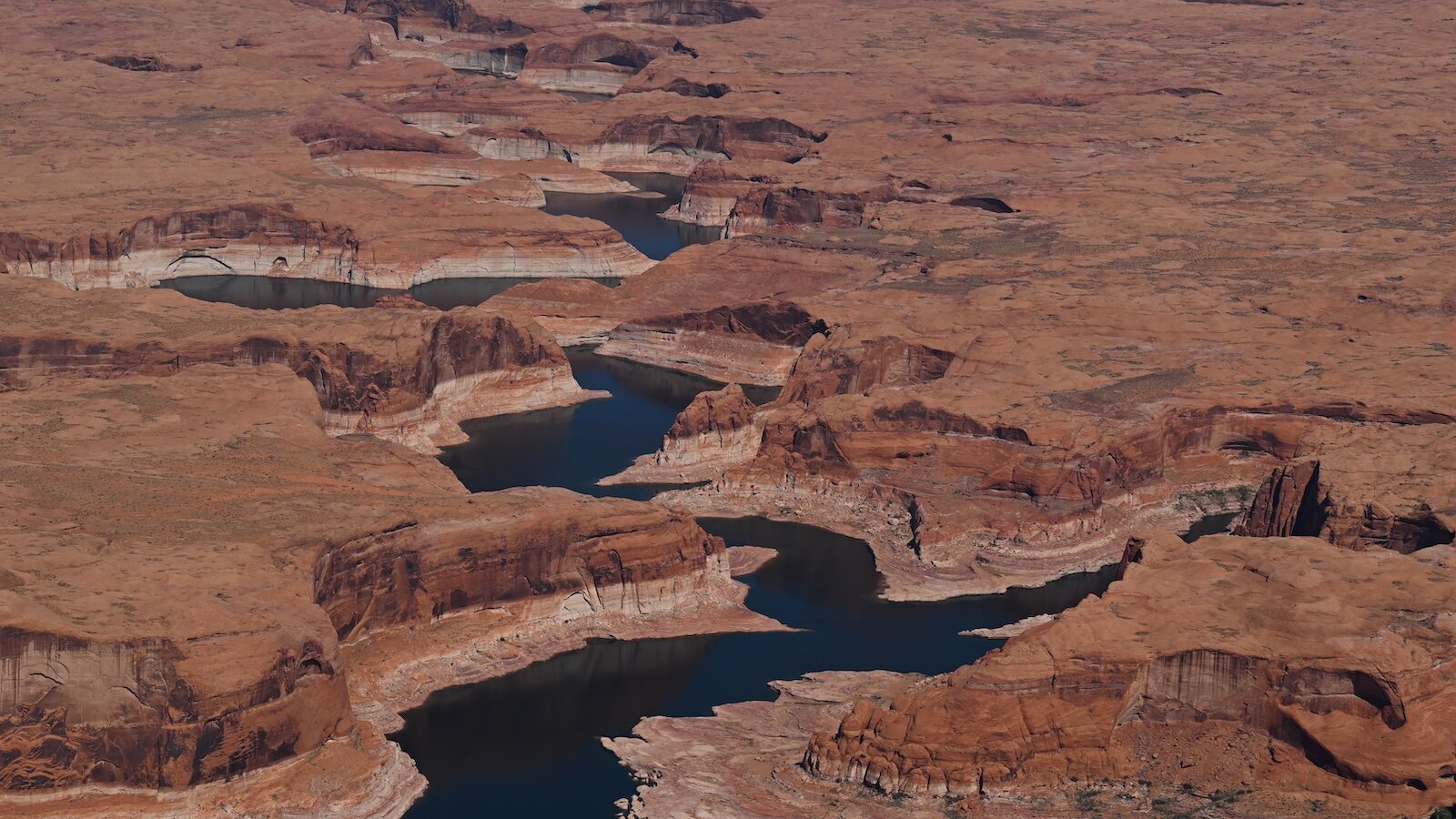
Nevada officials have long presented themselves as a voice for compromise and conservation in debates over the Colorado River. The Las Vegas area, home to two-thirds of the state’s population and most of its economy, has become a model of urban water conservation. As the river has declined from overuse and a decades-long drought exacerbated by climate change, southern Nevada water planners built extensive water reuse facilities and implemented tight restrictions on new turf and fountains, dropping the region’s per capita water use by 58 percent in roughly 20 years. Meanwhile, in interstate negotiations over the management of the Colorado River, state representatives have positioned themselves as bridge-builders, sometimes referring to themselves as the “middle basin” between the river’s divided upper and lower basin states.
When the federal government’s new management plan for the river was announced earlier this month, most observers thought Arizona , which stands to take the largest immediate cuts, would launch the first lawsuit over the plan’s implications for its water supplies. So it came as a surprise to many Colorado River experts when Nevada became the first to sue the federal government over the plan this week.
“I expected that there would be litigation, but it was surprising to me that Nevada fired the first shot,” said Anne Castle, former chair of the Upper Colorado River Commission,
Nevada’s lawsuit comes after more than two years of negotiations among the seven Colorado River states and the federal government over how to reduce water use on the declining river. The states failed to reach a long-term agreement before the river’s current management procedures expire in October, leaving the Interior Department to impose its own plan. The federal government’s plan largely relies on cuts to water use among the lower basin states — Arizona, Nevada, and California — to prop up water levels in the river’s largest reservoirs. Those reservoirs have been draining so quickly that the dwindling water depth could threaten hydropower and dam operations within months without intervention.
Nevada argues that the federal government’s plan illegally forces it to take too much of those cuts. In a worst-case scenario, the plan could allow for a 71 percent cut to the Las Vegas area’s water supply, the state argued, calling it an unacceptable risk to the state’s largest population center and economic hub. Nevada believes this outcome results from a misreading of the law and also claims the government didn’t consider important alternatives to such drastic cuts.
This worst-case scenario, which experts say is an interpretation of the plan’s implications by Nevada, would become possible if reservoir levels continue to drop and if Nevada couldn’t reach an agreement with Arizona and California to help it absorb more of those cuts. Those three states already have such an agreement, which is incorporated into the federal plan and meant to last through 2028, at which point the plan allows the states to update the operations with a new agreement. Without an agreement, the federal government will implement cuts based on pre-existing water rights and agreements, cutting the most from Arizona and leaning increasingly on Nevada and California as potential shortages increase. The plan was created through a decision-making process required under the National Environmental Policy Act, which mandates that federal agencies gather public input and consider environmental and socioeconomic impacts of major decisions.
Read Next
The Colorado River is vanishing — and the fixes are getting weird
Jake Bittle
At first glance, the lawsuit seems like a departure from Nevada’s long-standing posture as the river’s conciliator, advocating consensus among the river basin’s seven states and 30 tribes, which hold vast water rights but are not formal members of interstate negotiations. John Entsminger, the state’s negotiator on the river, has repeatedly portrayed compromise as the state’s preferred path, telling a Las Vegas water conference just a week before the lawsuit that negotiation and cooperation were the state’s “first, second, and third choice.”
But Nevada has consistently paired its call for consensus with a warning that it would defend its water if negotiations failed, and the state’s case seems less surprising in light of the drastic cuts it claims are possible under the federal plan. Unlike other states, Nevada sends its Colorado River water almost entirely to urban areas. That means cuts fall directly on the Las Vegas area, while other states can cushion the blow by fallowing agricultural fields.
“There is an absurdity to a plan that would require Las Vegas to cut 71 percent. That’s existential. Of course Nevada sued,” wrote John Fleck, water expert and author in residence at the University of New Mexico’s Utton Center, in a recent blog post .
The lawsuit can also be read as a continuation of Nevada’s advocacy for consensus among the basin states and tribes. With the states unable to reach a long-term agreement and the federal government moving ahead with its own plan, Nevada is now using a different tool to make the same basic argument: that a federal decision without full buy-in from all the states can’t accommodate all their needs and find the innovative solution needed to manage the river.
Nevada argues in its suit that the legally required decision-making process that led to the federal plan failed to account for economic consequences to the Las Vegas area or consider creative alternatives to such drastic water cuts, such as changes to the structure of Glen Canyon Dam. Nevadans argue the process was too narrow and failed to consider solutions that would have avoided such massive theoretical water shortages in a major metropolitan area.
“Nobody can deny that the federal government did a ton of modeling and scenario analyses, but in terms of...
Indexed and credited by AIPROPX. Originating outlet: Grist. Open at source →
An original, deterministic readout — composed only from the computed coverage facts on this page. No interpretation, no rating; figures only.
AIPROPX has consolidated 1 report from 1 outlet into a single canonical entry on “Nevada preached peace on the Colorado River. Now it’s suing to protect its water..” Every covered outlet is based in Other.
The only timestamped report came from Grist (Aug 28, 2026, 20:03 UTC).
2 statements are carried by only one outlet within this set and are not echoed by the others.
Every figure above is a direct count of real published articles. AIPROPX indexes and compares the original reporting — it never rewrites, rates, or editorializes — and each publisher’s full article is always one click away.
Generated by AIPROPX from the source counts above. AIPROPX indexes and resolves coverage; the original publishers are credited and linked at origin in every report.
Coverage from 1 independent outlet across 1 region — each view opens on its own page.
AIPROPX — “Nevada preached peace on the Colorado River. Now it’s suing to protect its water.” · https://www.aipropx.com/story/aaaeec78039260e6b799af438e80dd5b
Other events being covered across multiple sources right now.
Ukraine-Russia war latest: CIA chief ‘told Russian counterpart to make peace with Kyiv’ on mysterious Moscow trip
4 outletsWater main break floods downtown Springfield streets
3 outletsRussia-Ukraine war: Can new peace talks still happen?
3 outletsMounjaro Is Now Approved to Lower the Risk of Heart Events
3 outletsNevada maternity care deserts, ICE shock gloves and airport traffic
3 outletsHugging Face says sales for its robot ducks topped $2.6 million in 24 hours. Now there's a backlog.