
RESOLVING THE LEDGER
RESOLVING THE LEDGER
Only one outlet has reported this event so far — you're reading it below, credited to its source. AIPROPX is tracking the web for more coverage; as additional outlets confirm it, this becomes a full multi-source story automatically.
By AIPROPX Editorial Desk · Published · Updated
One outlet is reporting this so far. AIPROPX is tracking it and will gather every additional source as it develops — the full multi-source comparison appears automatically once a second outlet confirms it.
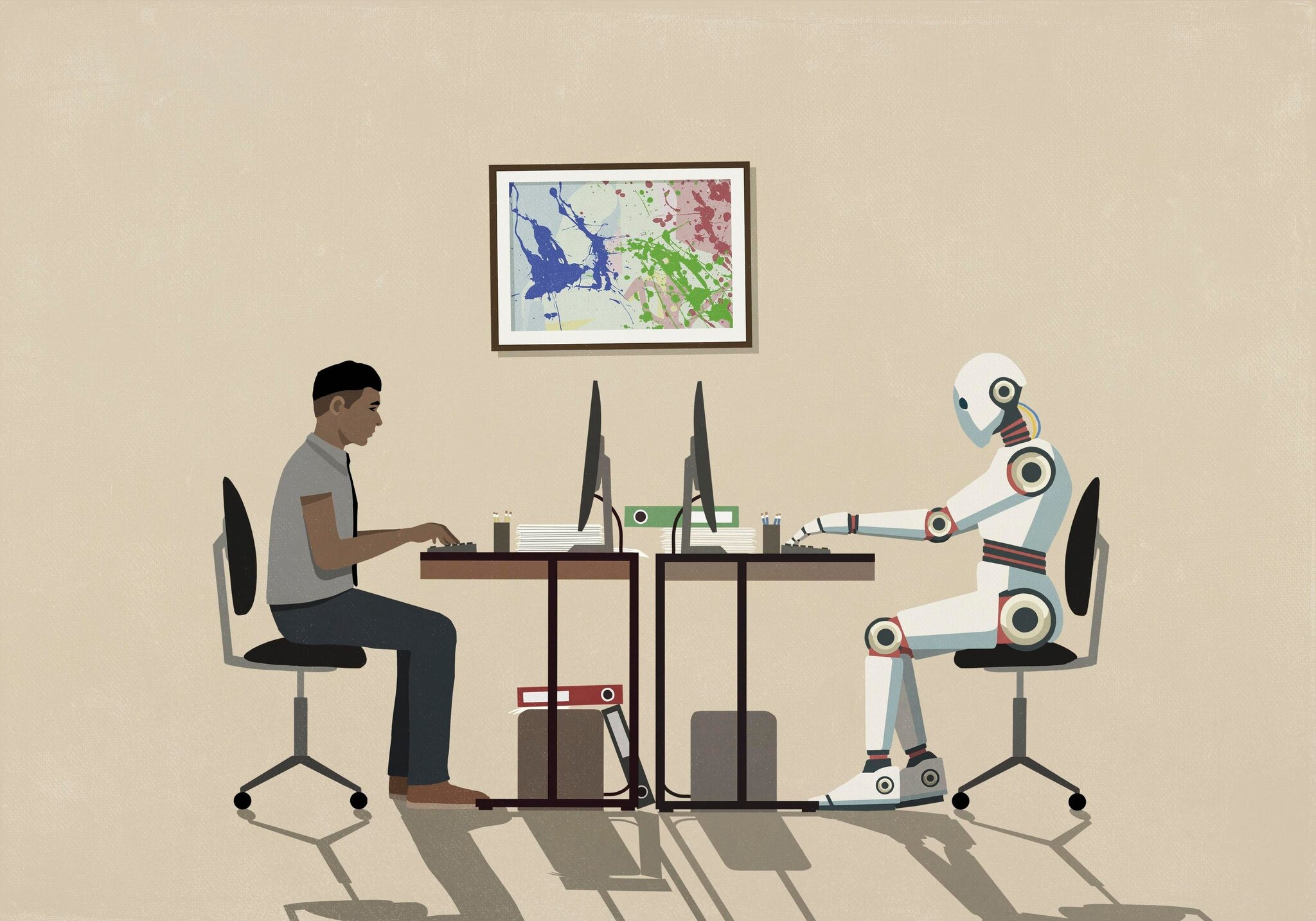
Leadership Strategies Invulnerability Bias: Why You Think AI Will Change All Jobs But Yours By Dr. Diane Hamilton ,
Forbes contributors publish independent expert analyses and insights. Curiosity expert improving engagement, innovation, and productivity. Follow Author Aug 09, 2026, 03:00am EDT Summary A common phenomenon, dubbed "invulnerability bias," sees individuals acknowledge AI's broad disruptive potential across industries, yet largely dismiss its impact on their personal jobs. This bias stems from a belief in their work's unique requirements, experience, and relationships. Research shows a significant gap: 62% foresee general AI impact, but only 28% expect it personally. Interestingly, those with greater AI knowledge exhibit less bias, suggesting familiarity reduces this blind spot. Professions like healthcare and law show high bias, while tech fields show less. This complacency can lead to overlooking gradual AI integration into daily tasks, ultimately costing individuals by preventing proactive adaptation. Overcoming this requires genuine curiosity and critically assessing one's specific job functions against AI capabilities.
When I ask a room whether AI will disrupt their industry, nearly every hand goes up. But if I ask that same room whether AI will disrupt their own specific job, the hands mostly stay down. I've watched this happen enough times that it stopped feeling like a coincidence. There's a name for it. Researchers call it invulnerability bias, a fancy way of saying you can believe a risk is real and still assume it somehow applies to everyone except you.
Part of what makes invulnerability bias so easy to miss is that most people have good reasons for believing their own job is different. You know how much experience your work requires, which relationships you rely on, and what you do that never appears in a job description. Then you hear about AI disrupting another industry or changing someone else's role, and it can seem perfectly reasonable to assume your situation is different.
A study published last year in Scientific Reports put real numbers behind this. On average, people rated their own jobs as less exposed to AI than jobs in general, although the strength of that bias varied by profession. Pew found a similar gap at a national scale. Sixty-two percent of U.S. adults think AI will have a major impact on workers generally, while only 28% think it will have a major impact on them personally. That's a lot of people looking at the same disruption and assuming it's happening to somebody else's career.
What I found most interesting was who was least likely to have the bias. People who reported knowing more about AI tended to show less invulnerability bias. The people who were more familiar with the technology were also more willing to see how it could affect their own work.
Profession made a difference too. Bias ran highest in healthcare, law, and public administration, and lowest in technology, engineering, and architecture, where only about a third of people showed it. I understand why someone practicing law or medicine might feel confident about the future of their work. They spend their days exercising judgment and drawing on specialized expertise that has historically been difficult to automate. That confidence can feel earned rather than assumed.
What I find most useful is the connection between AI knowledge and the bias . The more people reported knowing about AI, the less invulnerability bias they tended to show. That makes me wonder how much confidence about your own job comes from actually understanding the technology and how much comes from what you've heard about it secondhand.
Forrester found the same pattern inside B2B marketing. Eighty-two percent of respondents agreed AI would automate marketing work people currently do, while only 15% thought it would largely replace their own job. An entire industry can see the disruption coming while nearly every individual inside it assumes their own job is somehow further from it.
That contradiction rarely gets flagged inside a company, since a leadership team can commission an AI strategy, present it to the board, and fund it, while most of the people actually executing that strategy privately believe it describes someone else's role.
Part of why this is so easy to miss is that most jobs don't change all at once. AI rarely changes your entire role starting Monday morning. It begins taking over pieces of the work. You might notice a report gets drafted faster or research that once took hours takes minutes. Each change looks small enough on its own to shrug off, so it's easy to conclude your job has basically stayed the same. Over time, those small changes can add up to something much bigger.
AI also tends to get discussed in terms of millions of jobs and entire industries rather than individual jobs. That makes the change feel enormous in general and strangely distant up close. You can believe the statistics completely and still feel, sitting in your specific chair doing your specific work, like the exception they never quite meant to include.
I think about this as a curiosity problem as much as a confidence problem. Genuine curiosity means asking a question you don't already know the answer to and staying open to whatever comes back. Invulnerability bias skips that step. It lets you feel informed about a risk without ever pointing the question at yourself. You get the comfort of having thought about AI without having to examine your own exposure to it.
A genuinely curious person treats their own job security the way they'd treat any other claim worth checking, by looking for evidence rather than settling for a comfortable guess. Most people rarely apply that same standard here, maybe because this particular question feels too personal to examine with the same rigor they'd bring to other decisions at work.
The real cost comes later. Once you decide your own job is different, you stop looking ve...
Indexed and credited by AIPROPX. Originating outlet: Forbes. Open at source →
An original, deterministic readout — composed only from the computed coverage facts on this page. No interpretation, no rating; figures only.
AIPROPX has consolidated 1 report from 1 outlet into a single canonical entry on “Invulnerability Bias: Why You Think AI Will Change All Jobs But Yours.” Every covered outlet is based in US.
The only timestamped report came from Forbes (Aug 9, 2026, 07:00 UTC).
Comparing the wording across sources, the phrase recurring most across the coverage is “invulnerability bias”.
1 statement is carried by only one outlet within this set and is not echoed by the others.
Every figure above is a direct count of real published articles. AIPROPX indexes and compares the original reporting — it never rewrites, rates, or editorializes — and each publisher’s full article is always one click away.
Generated by AIPROPX from the source counts above. AIPROPX indexes and resolves coverage; the original publishers are credited and linked at origin in every report.
Coverage from 1 independent outlet across 1 region — each view opens on its own page.
AIPROPX — “Invulnerability Bias: Why You Think AI Will Change All Jobs But Yours” · https://www.aipropx.com/story/b83b31cbeedcbbc20be8dee1ec193d4a
Other events being covered across multiple sources right now.
Why you should buy iPhone 17 Pro now instead of waiting
6 outletsWhat the July jobs report reveals about the strength of the economy
6 outletsSpider Man Brand New Day Box Office Collections: Tom Holland starrer explode on 2nd Saturday, Hollywood All Time record beckons
4 outletsWNBA commissioner says league task force will discuss trans athlete participation
4 outletsThe AI boom is creating data center jobs that pay more
3 outletsCommanders' Laremy Tunsil diagnosed with torn triceps, reportedly will miss most of the 2026 season