
RESOLVING THE LEDGER
RESOLVING THE LEDGER
Only one outlet has reported this event so far — you're reading it below, credited to its source. AIPROPX is tracking the web for more coverage; as additional outlets confirm it, this becomes a full multi-source story automatically.
By AIPROPX Editorial Desk · Published · Updated
One outlet is reporting this so far. AIPROPX is tracking it and will gather every additional source as it develops — the full multi-source comparison appears automatically once a second outlet confirms it.
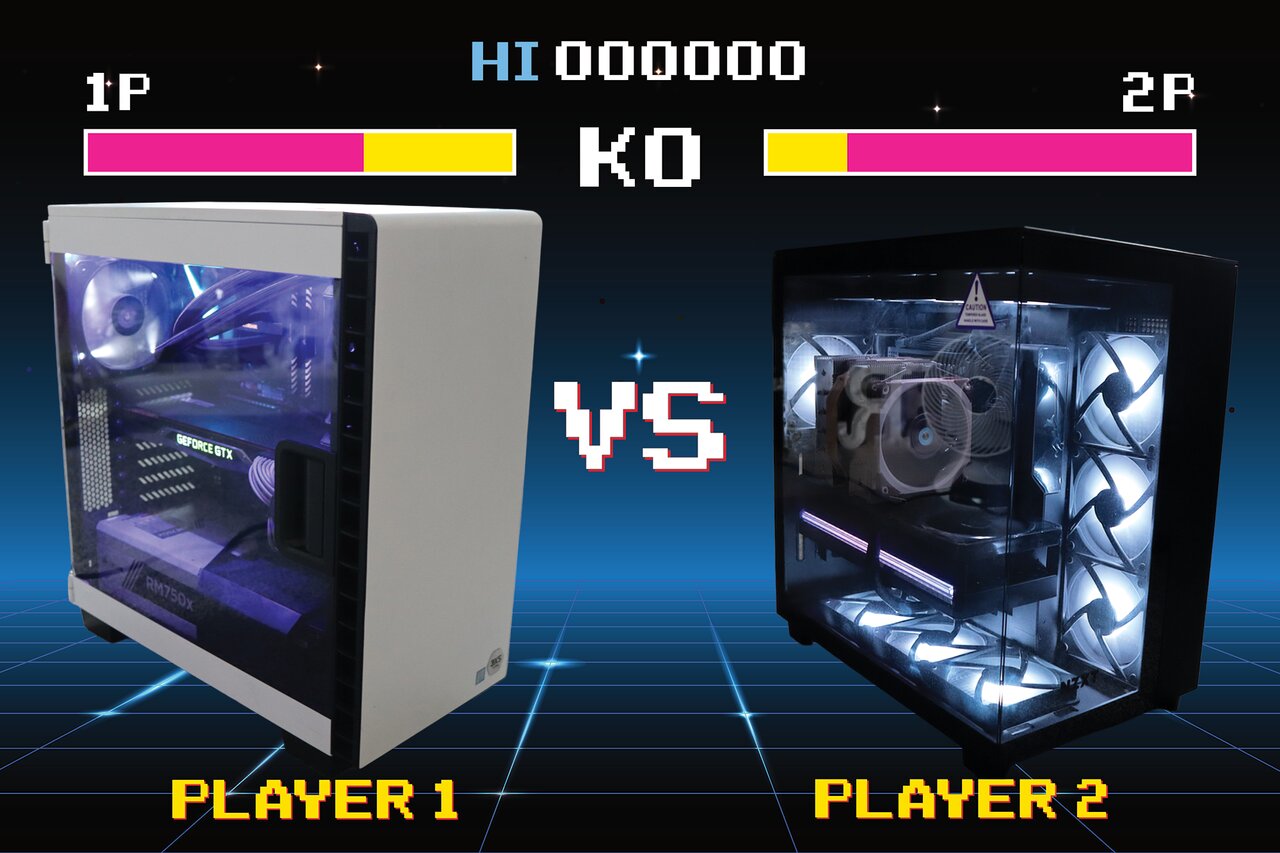
I was fourteen or so when I went to the Gadget Show Live (once a big tech event in the UK which showed off the latest technology) in 2016 as a punter and overheard someone on a stand I'd visited mention they'd spent £1,000 on a custom gaming PC.
A thousand pounds . On a computer. I remember turning that figure over in my head (it's roughly $1,400) and not quite being able to make sense of it, not necessarily because I couldn't fathom how much money that was, but because at the time, it seemed like a lot of money to spend on a PC without any frame of reference as to what that price got you.
As it turned out, £1,000 would have bought you an upper mid-range system back then, and speccing a top-end system of the time would have added an awful lot more to my 'dream budget'. A properly specced 3XS system built around Intel's then-flagship Kaby Lake processor, the Core i7-7700K, and an Nvidia GeForce GTX 1080 , would set you back around £1,700 including VAT .
Nvidia went one further with the venerable GTX 1080 Ti , which arrived in March 2017. It immediately became the card every serious PC gamer wanted, and pushed that high price even higher. Nonetheless, you still got an entire top-of-the-range PC for that price.
(Image credit: Future)
Here's what's strange about that number in 2026: it's roughly what you'd pay for a flagship graphics card alone . Nvidia's RTX 5090 should retail for roughly in line with what this entire PC cost, although the Asus ROG RTX 5090 Astral I've got for testing is over double the RRP of this PC, even taking inflation into account.
Intriguingly, the GPU that was the ceiling of consumer ambition in 2017 is now, in isolation, cheaper than a mid-range graphics card in 2026. Nvidia's GTX 1080 Ti launched at £699 / $699 (about AU$930); the RTX 5090 launched at £1,799, at least for the Founder's Edition card.
That's not a like-for-like comparison — flagship GPU pricing has always been a law unto itself — but it does tell you something about the economic difference between these two moments in PC gaming history.
Now, Scan has sent me that exact system, and I've plonked the GTX 1080 Ti Founder's Edition inside, and I've been running it alongside my own high-spec rig, with an RTX 5090 added for good measure, to see how the decade-old dream holds up.
What £1,700 bought you nearly a decade ago
Here's the entire spec sheet of the 3XS PC that Scan sent my way with the GPU swapped out:
CPU: Intel Core i7-7700K
Cooler: Corsair 240mm AIO
GPU: Nvidia GTX 1080 Ti Founder's Edition
RAM: Corsair Vengeance LED 16GB DDR4-3000
SSD: Samsung 960 Evo 250GB SSD (supplemented with a further 1TB SSD for game storage in my case)
Motherboard: Asus ROG Strix Z270F Gaming
PSU: Corsair RM750x 750W White
Case: Corsair Carbide 400C in white
On first impressions, I'm a fan of the Corsair Carbide 400C case, feeling it to be a quieter and more considered choice than a lot of the RGB-laden alternatives that were becoming increasingly common at the time. Coming in white adds a bit of style to proceedings, and it seems roomy enough for the build on offer here. The hinged door with glass window is a nice touch, too.
Inside, the Asus ROG Strix Z270F Gaming motherboard is decently feature-rich and adds a smattering of RGB in the top corner to sit alongside the white LEDs of the RAM and the stock case fan inside. The Samsung 960 Evo SSD would have been top spec at the time, but is the one component that feels particularly outdated. It's a fast, capable boot drive, but is easily filled up with a modern Windows 11 installation and a game or two. Back in 2017, you'd have definitely wanted a hard drive installed as well.
(Image credit: Future)
Then there's the GTX 1080 Ti Founder's Edition. Nvidia's reference cooler on the Ti was a meaningful step up from the blower-style designs of previous generations, with an open dual-fan layout that kept temperatures in check. It's a handsome card even by today's standards and feels more restrained than the AIB partner designs that surrounded it. Holding it in 2026 feels like handling something from a very specific and rather significant chapter in GPU history, given its legendary status.
The 1080 Ti has a reputation that outlasted the hardware cycle it was supposed to belong to. When Nvidia's RTX 2080 Ti arrived in 2018, it brought ray tracing and a steeper price — and offered only a slight bump in rasterisation performance that most 1080 Ti owners looked at the cost of upgrading and decided against it. Even now, folks are asking how good this card is today, which is testament to its performance - and indeed its reputation.
A modern point of reference
Of course, benchmark numbers are no good in isolation, so for comparison's sake, I'm putting the Scan system against my own personal gaming rig, with the added boost of the RTX 5090. Usually it'd be an RTX 4080 Super, but for a 'dream PC' angle, I needed to go with the modern dream. Here it is in terms of specs:
CPU: AMD Ryzen 7 7800X3D
Cooler: Noctua NH-D15
GPU: Asus ROG Astral RTX 5090
RAM: Corsair Vengeance 32GB (2x16GB) DDR5-6000 CL36
SSD: Lexar NM790 4TB
Motherboard: NZXT N7 B650E
PSU: NZXT C1200 1200W 80+ Gold ATX 3.0
Case: NZXT H9 Flow (2023)
That isn't too bad of a PC if I do say so myself, and yes, I could use faster RAM or a beefier AMD processor if I wanted to eke out as much performance as possible, but I haven't seen fit to upgrade just yet.
(Image credit: Future)
Benchmarking methodology
To see how this 2017-era PC performs in the big 2026, I thought it might be fun to run it through a range of games – both ones that are contemporaries of the system and some slightly more modern titles that might push it quite hard. I've also put it through a range of modern benchmark tests to gauge performance against the newer hardware.
To Scan's credit, the machine came running the latest version of Windows 11 25H2 and Nvidia's latest driver release for GTX 10-series desktop cards, driver 5...
Indexed and credited by AIPROPX. Originating outlet: TechRadar. Open at source →
An original, deterministic readout — composed only from the computed coverage facts on this page. No interpretation, no rating; figures only.
AIPROPX has consolidated 1 report from 1 outlet into a single canonical entry on “I pitted my dream PC from 2017 against an RTX 5090 monster in 2026 in a fight to the death.” Every covered outlet is based in Other.
The only timestamped report came from TechRadar (Aug 9, 2026, 15:00 UTC).
2 statements are carried by only one outlet within this set and are not echoed by the others.
Every figure above is a direct count of real published articles. AIPROPX indexes and compares the original reporting — it never rewrites, rates, or editorializes — and each publisher’s full article is always one click away.
Generated by AIPROPX from the source counts above. AIPROPX indexes and resolves coverage; the original publishers are credited and linked at origin in every report.
Coverage from 1 independent outlet across 1 region — each view opens on its own page.
AIPROPX — “I pitted my dream PC from 2017 against an RTX 5090 monster in 2026 in a fight to the death” · https://www.aipropx.com/story/badc58120467168e25c83a2e67d97dc8
Other events being covered across multiple sources right now.
Solar Eclipse 2026
5 outletsMississippi Lottery Mississippi Match 5, Cash 3 results for Aug. 8, 2026
4 outletsTexas Tech hosts largest summer commencement with 2026 class. See photos.
4 outletsWisconsin pushback against Flock cameras
3 outletsTour de France Femmes: Niewiadoma and Vollering fight for yellow on final stage
3 outletsLouisiana warns against flesh-eating bacteria after five deaths