
RESOLVING THE LEDGER
RESOLVING THE LEDGER
Only one outlet has reported this event so far — you're reading it below, credited to its source. AIPROPX is tracking the web for more coverage; as additional outlets confirm it, this becomes a full multi-source story automatically.
By AIPROPX Editorial Desk · Published · Updated
One outlet is reporting this so far. AIPROPX is tracking it and will gather every additional source as it develops — the full multi-source comparison appears automatically once a second outlet confirms it.
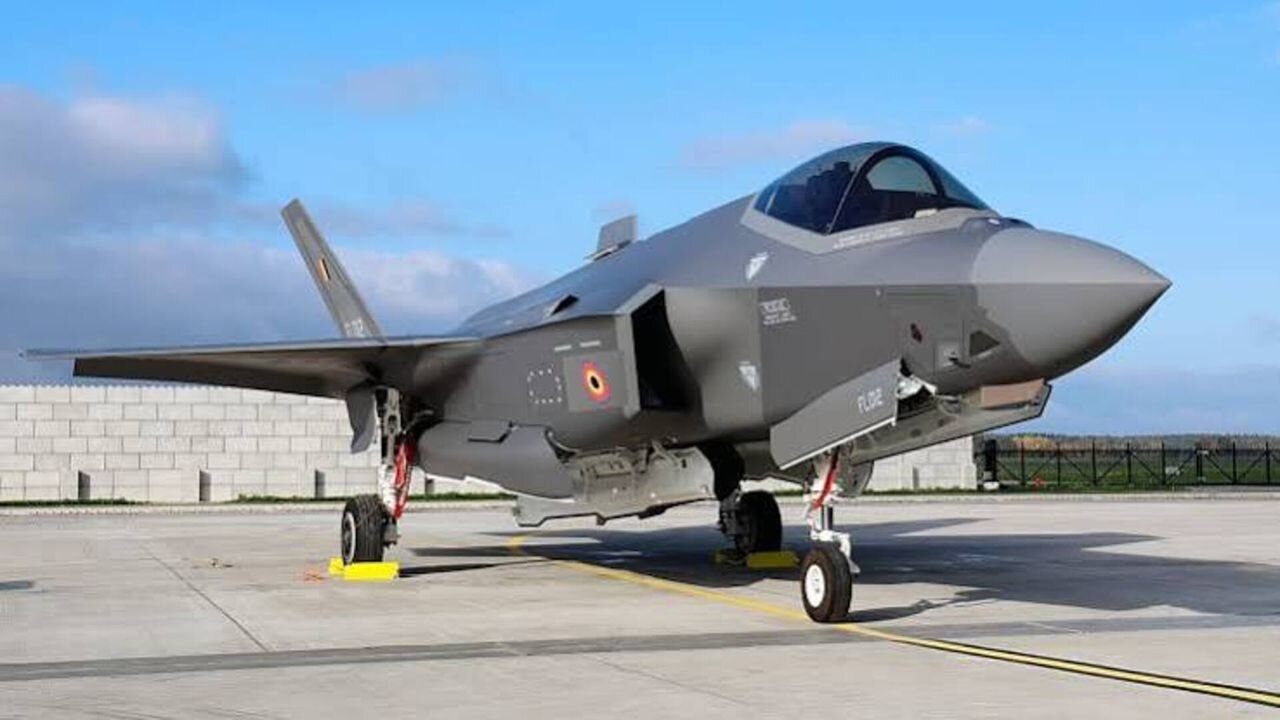
Chinese researchers built an AI targeting infrared traces from F-22 and F-35 engines
Flare decoys reportedly fail to fool this heat-based recognition model
Lab tests show recognition accuracy above 90 percent for simulated targets
Chinese researchers have claimed a lightweight AI system can identify heat signatures resembling those of F-22 and F-35 stealth fighters.
The F-22 and F-35 are designed to make enemy detection and tracking more difficult, particularly by reducing their visibility to radar and other sensors.
That makes any technology capable of recognizing their remaining infrared signatures potentially important for detecting aircraft built around stealth.
AI recognition focuses on aircraft heat
Unlike radar-based detection, infrared systems look for heat produced by an aircraft's engines, exhaust, and heated surfaces during flight.
The researchers claim that AI can analyze those patterns and distinguish simulated F-22 and F-35 signatures from other airborne objects.
Pilots often use flares to confuse conventional heat-seeking sensors during an engagement.
However, the researchers say that aircraft-generated heat differs from flare emissions, giving an AI system another basis for separating an aircraft from decoys.
The researchers tested their recognition model using simulated targets representing the thermal characteristics associated with F-22 and F-35 aircraft.
According to the study's lead author, the approach is intended to combine rapid processing with sufficient recognition capability for missile applications.
“Lightweight recognition models could become widely used in future air-to-air missiles because they can provide high-speed recognition while maintaining strong identification capabilities,” said An Jiangshan, first author of the study.
Laboratory testing reportedly produced recognition accuracy exceeding 90%, although operational performance against real aircraft remains unverified.
That distinction matters because real aircraft generate changing thermal patterns under different speeds, altitudes, maneuvering conditions, and environmental circumstances.
The researchers also describe the system as lightweight, suggesting that its computing requirements could be suitable for missile-mounted hardware with limited space and processing capacity.
Limits remain around real-world performance
Stealth aircraft are designed primarily to reduce radar visibility, but infrared emissions remain an important consideration for infrared-guided weapons.
Heat-seeking missiles already use infrared sensors, while machine-learning systems could potentially assist those sensors with identifying complex thermal patterns.
However, the reported research does not establish that the system can reliably track operational F-22 or F-35 aircraft under combat conditions.
Actual engagements would introduce atmospheric conditions, changing viewing angles, aircraft maneuvers, background temperatures, and electronic countermeasures that laboratory testing may not fully reproduce.
Even without proving the system can defeat operational aircraft, the research points toward a growing challenge for American stealth platforms.
The United States cannot assume that reducing radar visibility will remain sufficient as AI systems become better at recognizing infrared patterns.
Future F-22 and F-35 upgrades could therefore require greater attention to heat management, exhaust signatures and other infrared characteristics.
The same concern applies to future stealth bombers, which could face increasingly capable AI-assisted infrared sensors.
Stealth designs may need to consider how machine-learning systems interpret heat patterns rather than simply minimizing the strength of those emissions.
That could become increasingly important as lightweight AI processors become easier to integrate into missiles and other airborne weapons.
American defence planners have little reason to wait until such systems demonstrate their capabilities during actual combat.
Via SCMP
Indexed and credited by AIPROPX. Originating outlet: TechRadar. Open at source →
An original, deterministic readout — composed only from the computed coverage facts on this page. No interpretation, no rating; figures only.
AIPROPX has consolidated 1 report from 1 outlet into a single canonical entry on “China says new AI missile system can track US F-35s with 90% accuracy.” Every covered outlet is based in Other.
The only timestamped report came from TechRadar (Aug 17, 2026, 23:25 UTC).
2 statements are carried by only one outlet within this set and are not echoed by the others.
Every figure above is a direct count of real published articles. AIPROPX indexes and compares the original reporting — it never rewrites, rates, or editorializes — and each publisher’s full article is always one click away.
Generated by AIPROPX from the source counts above. AIPROPX indexes and resolves coverage; the original publishers are credited and linked at origin in every report.
Coverage from 1 independent outlet across 1 region — each view opens on its own page.
AIPROPX — “China says new AI missile system can track US F-35s with 90% accuracy” · https://www.aipropx.com/story/bd7fdda591470720e0fb706813fab219
Other events being covered across multiple sources right now.
Movie that went viral for terrible animation becomes China box office hit
3 outletsNavy awarded $22.9B contract to Raytheon to accelerate Tomahawk missile production
1 outletsTurn Your Rising Home Equity Into Cash You Can Use
29 outletsJonas Brothers Are ‘Burning Up’ Again With New 45-City Tour
25 outletsSupreme Court rejects final Trump appeal of $5 million E. Jean Carroll verdict
24 outletsTrump defends his move to cut back U.S.-South Korea military exercises