
RESOLVING THE LEDGER
RESOLVING THE LEDGER
This is not a single article. It's every outletcovering this one event, gathered in one place — read AIPROPX's summary, see where the sources line up, then open any report at its origin.
By AIPROPX Editorial Desk · Published · Updated
Everything reported about this story, gathered from 3 sources. Read the summary below, then tap any source to open that report.

Astronomers at MIT and elsewhere have spotted an extremely bright red spot in the early universe. The object resembles an enormous star, roughly the size of our solar system. But it also is putting out 100 billion times more energy than any known star can physically produce. In fact, such energies are closer to what a black hole might generate.
Summary indexed by AIPROPX from Phys.org’s reporting — the full article is one click away. Open at source →
3 outlets are covering this. Resolve the ledger to read what they collectively report — the common thread, in plain terms.
Every report on this story — read the summary of each, then open any at its source. AIPROPX summarizes and links; it never reproduces the original.
Astronomers at MIT and elsewhere have spotted an extremely bright red spot in the early universe. The object resembles an enormous star, roughly the size of our solar system. But it also is putting out 100 billion times more energy than any known star can physically produce. In fact, such energies are closer to what a black hole might generate.
Read this report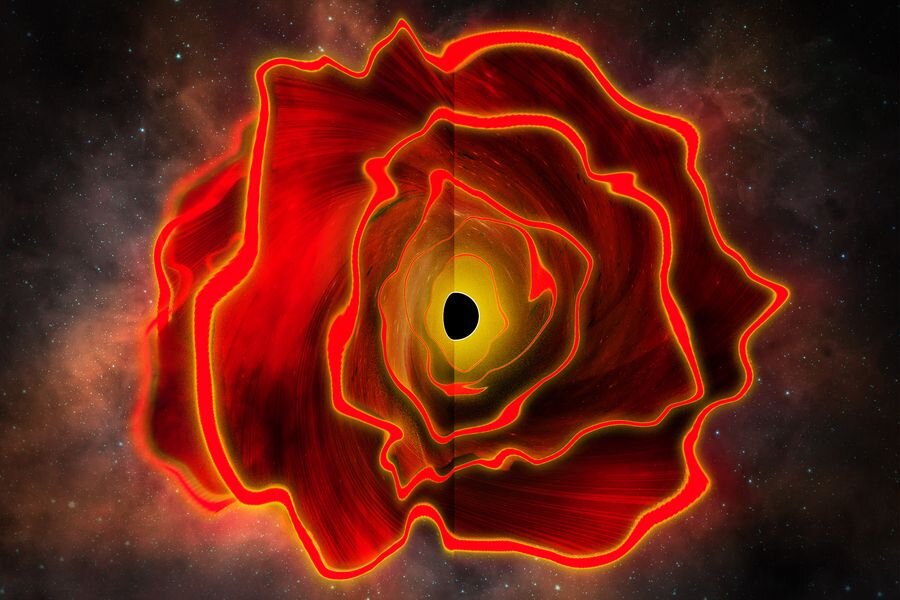
An object observed by the James Webb Space Telescope lends credence to a strange explanation for the mysterious red spots in the early universe.
Read this reportAn original, deterministic readout — composed only from the computed coverage facts on this page. No interpretation, no rating; figures only.
AIPROPX has consolidated 3 reports from 3 outlets into a single canonical entry on “Black hole star: Astronomers discover a brand-new type of astrophysical object.” The covered outlets are based across 2 regions — Other and US.
The earliest report in this entry came from Yahoo (Aug 14, 2026, 19:40 UTC); the most recent came from Phys.org (Aug 16, 2026, 11:00 UTC).
Comparing the wording across sources, 2 named entities are referenced by multiple outlets and the phrase recurring most across the coverage is “astronomers discover”.
3 statements are carried by only one outlet within this set and are not echoed by the others.
Every figure above is a direct count of real published articles. AIPROPX indexes and compares the original reporting — it never rewrites, rates, or editorializes — and each publisher’s full article is always one click away.
Generated by AIPROPX from the source counts above. AIPROPX indexes and resolves coverage; the original publishers are credited and linked at origin in every report.
Coverage from 3 independent outlets across 2 regions — each view opens on its own page.
AIPROPX — “Black hole star: Astronomers discover a brand-new type of astrophysical object” · https://www.aipropx.com/story/c54dd8a58a634c728489ff13d164d7df
Other events being covered across multiple sources right now.
D23 reveals X-Men cast, new Star Wars film and major Disney animation updates
4 outletsDemocrats' 2028 presidential calendar gives Black and Latino voters and union members an early say
28 outletsLala weakens to tropical storm, brings heavy rain, wind, flooding to Hawaii
21 outletsTrump admin says WH ballroom 'beyond the point of no return' in Supreme Court appeal
16 outletsWhat to know about Luigi Mangione's guilty plea in killing of UnitedHealthcare CEO Brian Thompson
12 outletsIMPACT DAY: Sunday brings the isolated severe weather and flooding threat