
RESOLVING THE LEDGER
RESOLVING THE LEDGER
Only one outlet has reported this event so far — you're reading it below, credited to its source. AIPROPX is tracking the web for more coverage; as additional outlets confirm it, this becomes a full multi-source story automatically.
By AIPROPX Editorial Desk · Published · Updated
One outlet is reporting this so far. AIPROPX is tracking it and will gather every additional source as it develops — the full multi-source comparison appears automatically once a second outlet confirms it.
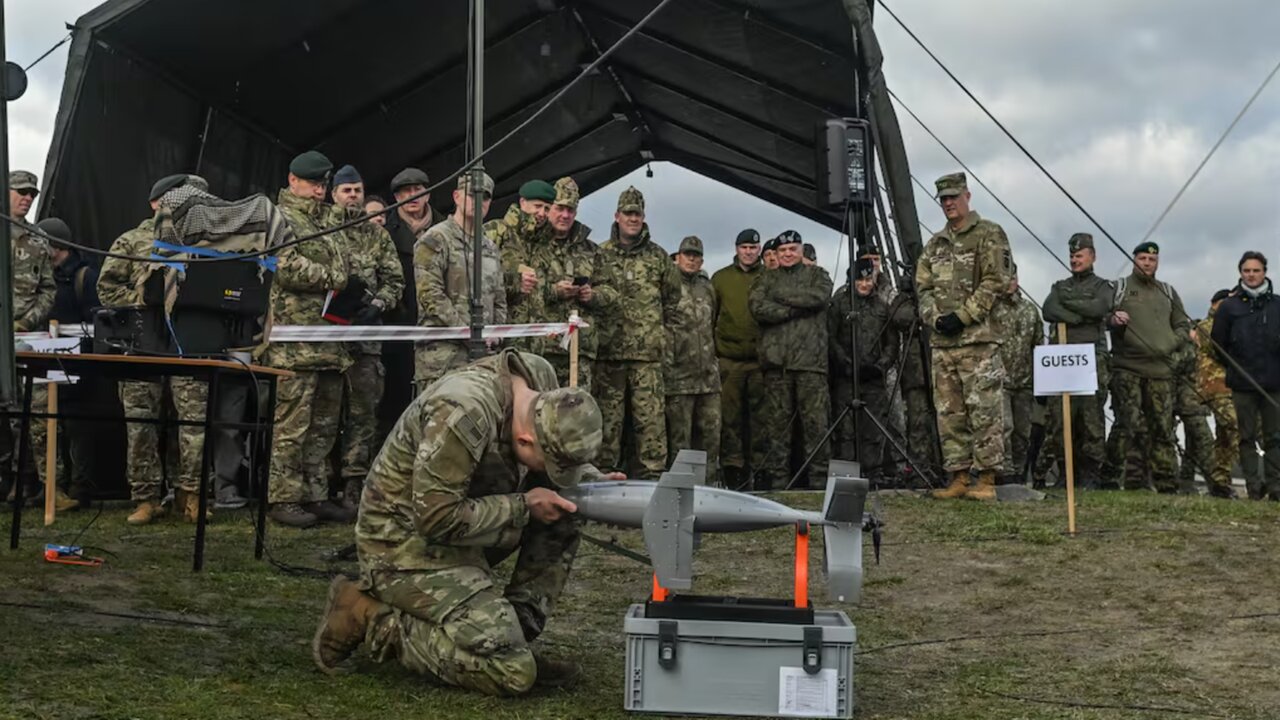
Japan ramps up drone production to reduce dependence on Chinese manufacturers
Defense startups are shifting from civilian projects into military drone manufacturing rapidly
Japan dramatically increases funding for interceptor drones and autonomous defense systems
Japan's drive toward large-scale drone manufacturing has gained fresh urgency, as a growing cluster of startups, including Eams Robotics and Terra Drone, are now shifting from civilian projects toward defense-oriented drone production.
A report from Nikkei Asia said Japanese Prime Minister Sanae Takaichi seeks to reduce the country's reliance on Chinese suppliers.
Chinese firms currently hold about 90% of the global industrial drone market, a dominance Tokyo now views as a strategic vulnerability worth addressing.
Startups pivot from civilian work
Eams Robotics began in 2016 as an aerial photography company serving television broadcasters before moving into drone manufacturing two years later.
The company, based in Minamisoma, has since worked with Sagawa Express, the University of Tokyo, and NTT DoCoMo on autonomous flight systems.
In December 2025, the company flew a fully autonomous drone across an active railway line without a ground observer present.
It now reportedly aims to partner with the American defense firm Anduril, mirroring a wider shift taking place across the industry.
Terra Drone, the more defense-focused of the two firms, is launching mass production of Japan-made batteries for defense and industrial customers.
Batteries account for more than a quarter of a drone's cost, and Japan currently lacks a domestic supplier able to meet defense-grade demands.
Budget and battlefield pressure build
Japan's budget for unmanned defense systems jumped this year to 277 billion yen (~$1.72 billion), up from 111 billion yen (v$705 million) in 2025.
Its total defense spending is also set to rise to 3.5% of GDP, a shift expected to channel further investment into unmanned systems.
The ruling Liberal Democratic Party approved a plan on June 9 to produce roughly 80,000 drones annually by 2030, though funding details remain sketchy.
Japan's Acquisition, Technology and Logistics Agency (ATLA), the defense ministry's procurement arm, has scheduled demonstrations next month, aiming to fast-track acquisition and deployment of interceptor drones near radar sites and bases.
These systems are meant to counter long-range suicide drones such as the Shahed-136, which have flown as far as 1,100 miles in the Middle East.
The push for domestic production comes as reports surface that Tomahawk missile deliveries to Japan could face delays, after the 38-day U.S. campaign against Iran strained the U.S stockpiles.
Defense officials in both Washington and Tokyo have denied any disruption, though Japan's defense minister said domestic missile development will continue.
Unconfirmed reports suggest Anduril has discussed converting Nissan's Oppama plant into a drone production site, amid concerns over a possible Taiwan Strait conflict.
This fits into Japan's wider five-year military buildup, set to wrap up in 2027, which also covers missile networks and unmanned ground and maritime systems.
Terra Drone CEO Toru Tokushige described interest from Japan's defense ministry as "very much positive," citing lessons drawn from Ukraine's battlefield experience.
However, whether that optimism will eventually translate into real, battle-tested capability against long-range drone threats remains genuinely uncertain.
Indexed and credited by AIPROPX. Originating outlet: TechRadar. Open at source →
An original, deterministic readout — composed only from the computed coverage facts on this page. No interpretation, no rating; figures only.
AIPROPX has consolidated 1 report from 1 outlet into a single canonical entry on “Could Japan be the next drone giant? Prime Minister looks to push domestic production to reduce reliance on China.” Every covered outlet is based in Other.
The only timestamped report came from TechRadar (Aug 5, 2026, 22:45 UTC).
2 statements are carried by only one outlet within this set and are not echoed by the others.
Every figure above is a direct count of real published articles. AIPROPX indexes and compares the original reporting — it never rewrites, rates, or editorializes — and each publisher’s full article is always one click away.
Generated by AIPROPX from the source counts above. AIPROPX indexes and resolves coverage; the original publishers are credited and linked at origin in every report.
Coverage from 1 independent outlet across 1 region — each view opens on its own page.
AIPROPX — “Could Japan be the next drone giant? Prime Minister looks to push domestic production to reduce reliance on China” · https://www.aipropx.com/story/cac106ff80f1b1a2e2a5d29e136ff3ce
Other events being covered across multiple sources right now.
Drone carrying explosives at German airport marks ‘new level of danger’, says interior minister
6 outletsMike Johnson shrugs off allegations of Max Miller’s abuse: ‘There’s all sorts of domestic events going on
5 outletsStrong Earnings Push the S&P 500 to New Record High
3 outletsSpaceX launches 3 giant BlueBird direct-to-cell satellites on Falcon 9 rocket (video)
5 outletsExplosive drone forces shutdown at major German airport serving NATO, Ukraine flights
2 outletsFBI director Kash Patel reveals new law enforcement partnerships with China and Russia