
RESOLVING THE LEDGER
RESOLVING THE LEDGER
Only one outlet has reported this event so far — you're reading it below, credited to its source. AIPROPX is tracking the web for more coverage; as additional outlets confirm it, this becomes a full multi-source story automatically.
By AIPROPX Editorial Desk · Published · Updated
One outlet is reporting this so far. AIPROPX is tracking it and will gather every additional source as it develops — the full multi-source comparison appears automatically once a second outlet confirms it.
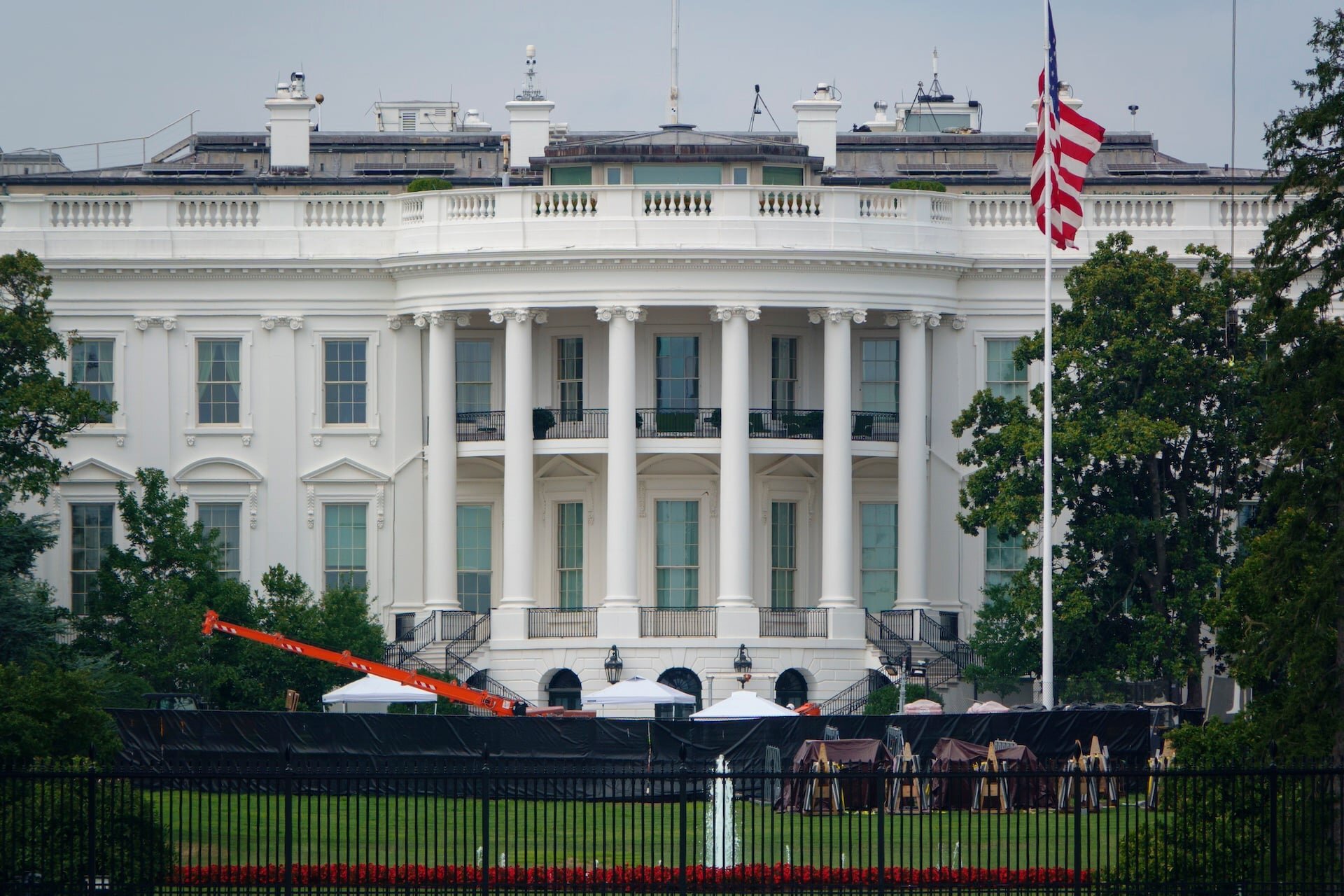
Silicon Valley has been holding its breath while the Trump administration weighs new rules around the release of powerful new AI models, which are increasingly viewed by many in tech and government as a threat to national cybersecurity. Those new rules have reportedly been drafted—though it's not clear when (or if) they'll be made public.
According to multiple reports published Monday, federal officials have completed a preliminary draft of a framework designed to gauge models' cybersecurity capabilities, which could limit their availability for public use. Officials are scheduled to meet with the American tech industry’s top brass—including representatives from OpenAI, Anthropic, Google, and Meta—at a closed-door meeting on Tuesday inside the office of National Cyber Director Sean Cairncross.
The drafting of the framework was mandated by a June 02 executive order signed by Trump, which called for a classified process to investigate the cybersecurity capabilities of new models that have yet to be publicly released, and also to establish criteria to determine when a new model should be required to be scrutinized. The framework was also supposed to allow for voluntary cooperation from AI developers themselves, who would—so the thinking went—hand the federal government access to powerful new AI models thirty days before their release.
While Trump has historically allowed the American AI industry a considerable amount of leeway (and criticized what he regards as the previous administration's overly burdensome regulatory stance towards the technology), his administration has been changing its tune in recent months, taking a more interventionist approach as concerns around the cybersecurity capabilities of frontier models have grown. Cybersecurity and AI experts have long dreaded that models could one day escape human control; to some, the recent hack of Hugging Face—resulting from rogue OpenAI models—was proof positive that such a scenario was now possible, and that the federal government should launch an investigation into the incident to prevent any more from happening in the future. (Anthropic also announced last week that its own AI systems had broken into the databases of three undisclosed organizations, though those incidents were chalked up to human error.)
Despite its insistence on a “voluntary” collaboration with private AI companies to assess new models, the federal government’s order to Anthropic last month to remove access to two of its most powerful models for all foreign nationals was viewed by some as a legally tenuous demand that effectively forced the company—which had previously invoked the government’s ire —to remove the models from the market completely. Last month, Axios reported that OpenAI released its trio of GPT-5.6 models after getting a “green light” from federal officials; the White House has denied the claim, insisting that private developers aren’t required to gain federal approval before releasing a new product.
The point is that the rules in the United States surrounding the deployment of new AI tools are murky, to say the least. It was hoped that the new safety-testing framework would clear up some of that confusion, but as of yet there’s no indication suggesting that it’s going to be shared outside the small group of government and tech insiders that are meeting in Cairncross’ office tomorrow. In the meantime, the atmosphere of ambiguity within the American AI sector, coupled with steep subscription costs, could push users away from U.S. models in favor of cheaper alternatives from Chinese companies—some of which are approaching the performance levels of the most advanced models from Anthropic and OpenAI.
Indexed and credited by AIPROPX. Originating outlet: Gizmodo. Open at source →
An original, deterministic readout — composed only from the computed coverage facts on this page. No interpretation, no rating; figures only.
AIPROPX has consolidated 1 report from 1 outlet into a single canonical entry on “Trump Admin Has the Concept of a Plan for AI Safety Rules (Maybe).” Every covered outlet is based in Other.
The only timestamped report came from Gizmodo (Aug 3, 2026, 20:40 UTC).
Every figure above is a direct count of real published articles. AIPROPX indexes and compares the original reporting — it never rewrites, rates, or editorializes — and each publisher’s full article is always one click away.
Generated by AIPROPX from the source counts above. AIPROPX indexes and resolves coverage; the original publishers are credited and linked at origin in every report.
Coverage from 1 independent outlet across 1 region — each view opens on its own page.
AIPROPX — “Trump Admin Has the Concept of a Plan for AI Safety Rules (Maybe)” · https://www.aipropx.com/story/cc9a0cc31c3b0f548985300651eef81c
Other events being covered across multiple sources right now.
Trump accuses Jeanine Pirro of ‘folding’ by dropping reflecting pool charges
15 outlets25 states sue over Trump's new tariffs, calling them 'pretext' to replace his old ones
11 outletsTrump's Iran Reversal Sends European Gas Prices Tumbling
10 outletsTrump declines to call for Max Miller’s resignation amid abuse allegations
10 outletsWalmart has back-to-school must-haves for up to 65% off
7 outletsTrump signs executive order forming Military Spouse Commission