
RESOLVING THE LEDGER
RESOLVING THE LEDGER
Only one outlet has reported this event so far — you're reading it below, credited to its source. AIPROPX is tracking the web for more coverage; as additional outlets confirm it, this becomes a full multi-source story automatically.
By AIPROPX Editorial Desk · Published · Updated
One outlet is reporting this so far. AIPROPX is tracking it and will gather every additional source as it develops — the full multi-source comparison appears automatically once a second outlet confirms it.
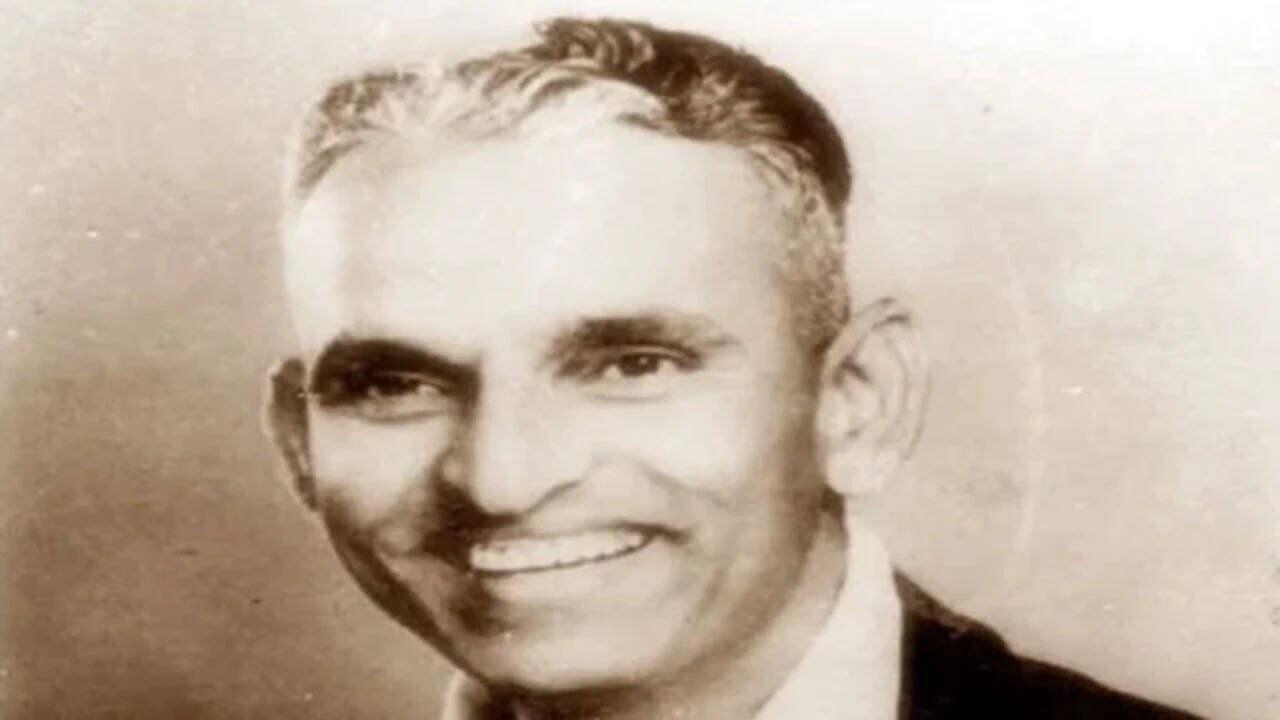
In Indian sporting history, few careers carry an irony as striking as that of MJ Gopalan. A gifted cricketer and hockey player, Gopalan found himself facing an extraordinary choice in 1936: pursue a place in the Indian hockey team for the Berlin Olympics under legendary captain Dhyan Chand, or travel to England with the Indian cricket side. He chose cricket, following his greater passion. But what followed made the decision one of the most fascinating “what if” moments in Indian sport. The Indian hockey team went on to win Olympic gold in Berlin, while Gopalan, despite being part of the cricket tour he had chosen, did not get an opportunity to play a Test in England. Gopalan was a genuine double international, representing India in both cricket and hockey. Born in Morappakam and raised in Triplicane, Chennai, he emerged as a fast-medium bowler capable of moving the ball both ways and became one of the leading figures in Madras cricket. His cricketing talent was spotted by CP Johnstone, one of the founding figures of Madras cricket, and Gopalan soon made his mark in local cricket. His first-class career eventually brought him 194 wickets and 2,916 runs in 78 matches, making him far more successful at that level than his modest international record would suggest. Cricket over Berlin Olympics with Dhyan Chand
Gopalan's hockey career was also significant. He played as a centre-half and, in 1935, toured New Zealand with the Indian hockey side, which enjoyed considerable success. That experience put him firmly in the reckoning for the 1936 Olympic squad. But when the opportunity came to compete for a place in the hockey team for the Berlin Games, Gopalan chose not to pursue the Olympic route. Instead, he accepted his place on the cricket tour of England. It was a decision that looked very different once the Berlin Olympics were over. India, led by Dhyan Chand, produced one of the most dominant campaigns in Olympic hockey history and won the gold medal after defeating Germany 8-1 in the final. Gopalan, who had been faced with the possibility of being part of that historic side, was instead in England with the cricket team. The irony became even greater because his opportunities on the cricket tour were limited. With Mohammad Nissar and Amar Singh ahead of him, Gopalan was not expected to play a major role, and he ultimately did not play a Test in England. Just one Test for India
Gopalan had already made his Test debut before the 1936 tour, playing his only Test for India against England at Calcutta in the 1933-34 season. He took one wicket and scored 18 runs. Despite his reputation in domestic cricket, that remained his only appearance at Test level. His first-class record, however, reflected the quality of the cricketer he was. Gopalan took 194 wickets and scored 2,916 runs in 78 matches, while his batting improved significantly as his career progressed. He also captained Madras for several years and remained one of the most influential figures in the city's cricketing circles for around 25 years. But perhaps the most remarkable chapter of Gopalan's cricket career came not in Test cricket, but at the very beginning of India's premier domestic competition. He bowled the first ball in Ranji Trophy history
When the Ranji Trophy was inaugurated in 1934, Madras and Mysore played the competition's first-ever match. Gopalan was given the honour of bowling the first delivery in Ranji Trophy history. That moment ensured that, regardless of the brevity of his Test career, his name would remain permanently linked to one of the most important competitions in Indian cricket. The Ranji Trophy would become the country's premier first-class tournament and a crucial pathway for generations of Indian cricketers. Gopalan's legacy in Madras cricket continued well beyond his playing career. He later served as a national selector in the 1950s and remained a respected figure in Indian cricket. In 1952, a silver jubilee fund was started to mark his 25 years in cricket and hockey, while the annual contest between Madras and Ceylon was named the MJ Gopalan Trophy. The competition continued for decades, underlining the esteem in which he was held. A gate at Chepauk carries his name
Gopalan's connection with Chennai cricket was eventually honoured at the city's iconic MA Chidambaram Stadium. One of the entrances at the famous Chepauk stadium is named after him, ensuring that his name remains part of the physical landscape of Indian cricket. His career therefore presents a remarkable contradiction. He was good enough to represent India in two sports and was considered for an Olympic hockey team captained by Dhyan Chand, yet his cricket career at the highest international level consisted of only one Test. The England tour that he chose over the Berlin Olympics did not give him the opportunities he might have expected, while the hockey team he left behind returned from Germany as Olympic champions. Yet Gopalan's choice should not simply be viewed as a mistake. Cricket was his passion, and in 1936 he chose the sport he loved. What makes the decision so compelling is the benefit of hindsight. Had he pursued hockey and made the Olympic squad, he could have been part of Dhyan Chand's gold-medal-winning team and one of the most celebrated sporting groups in India's history. Instead, he became part of a different kind of history. He chose cricket over a chance at Olympic gold with Dhyan Chand, played only one Test for India, but bowled the first ball in Ranji Trophy history. His name lives on at Chepauk, his first-class record remains impressive, and his story continues to stand as one of Indian sport's great unanswered “what ifs”. Gopalan died in December 2003 after a long life in Indian sport. At the time of his death, he was regarded as the oldest surviving Test cricketer.
Indexed and credited by AIPROPX. Originating outlet: Yahoo Sports. Open at source →
An original, deterministic readout — composed only from the computed coverage facts on this page. No interpretation, no rating; figures only.
AIPROPX has consolidated 1 report from 1 outlet into a single canonical entry on “He chose cricket over Olympic hockey gold with Dhyan Chand: MJ Gopalan played just 1 Test and bowled the first Ranji Trophy ball.” Every covered outlet is based in US.
The only timestamped report came from Yahoo Sports (Aug 29, 2026, 16:41 UTC).
Comparing the wording across sources, the phrase recurring most across the coverage is “olympic hockey”.
2 statements are carried by only one outlet within this set and are not echoed by the others.
Every figure above is a direct count of real published articles. AIPROPX indexes and compares the original reporting — it never rewrites, rates, or editorializes — and each publisher’s full article is always one click away.
Generated by AIPROPX from the source counts above. AIPROPX indexes and resolves coverage; the original publishers are credited and linked at origin in every report.
Coverage from 1 independent outlet across 1 region — each view opens on its own page.
AIPROPX — “He chose cricket over Olympic hockey gold with Dhyan Chand: MJ Gopalan played just 1 Test and bowled the first Ranji Trophy ball” · https://www.aipropx.com/story/ce8a8540074cdfbead61e94a077a5340
Other events being covered across multiple sources right now.
From five days to just two: Michael Atherton explains why Test cricket is getting shorter
1 outletsGold Star fathers honor sons killed in Kabul attack
2 outletsHow to watch South Africa vs. New Zealand (2nd Test) online for free
1 outletsToday at the Test
1 outletsDurham v Gloucestershire, Glamorgan v Hampshire: county cricket, day three
21 outletsFar-right British provocateur Milo Yiannopoulos has been deported after his immigration arrest in US