
RESOLVING THE LEDGER
RESOLVING THE LEDGER
Only one outlet has reported this event so far — you're reading it below, credited to its source. AIPROPX is tracking the web for more coverage; as additional outlets confirm it, this becomes a full multi-source story automatically.
By AIPROPX Editorial Desk · Published · Updated
One outlet is reporting this so far. AIPROPX is tracking it and will gather every additional source as it develops — the full multi-source comparison appears automatically once a second outlet confirms it.
Nava Freiberg is The Times of Israel's deputy diplomatic correspondent.
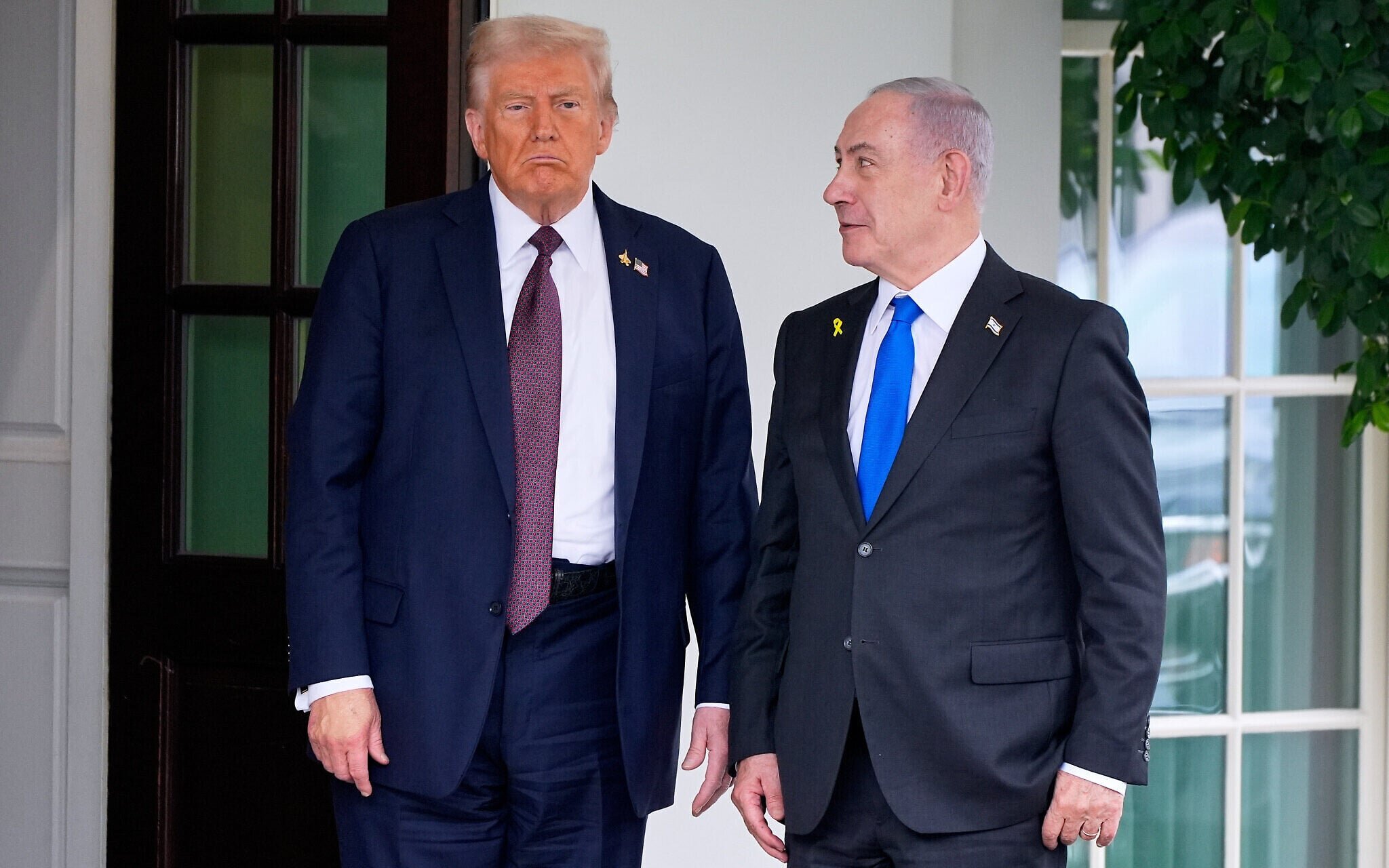
Prime Minister Benjamin Netanyahu and US President Donald Trump will meet at the White House on Tuesday for the eighth time since Trump’s second term began — with both leaders facing exceptionally difficult circumstances.
The meeting is the first in five months, after a year and a half that saw the two leaders rarely go more than 10 weeks without seeing each other, reflecting the radical shift in their relationship since their last sit-down. Netanyahu only secured the Oval Office invite after weeks of effort, combining the trip with his planned attendance at the funeral of the late Republican senator Lindsey Graham.
The last meeting between the pair took place on February 11, some two weeks before they launched an ambitious joint campaign against Iran, with stated goals of destroying the Islamic Republic’s nuclear, ballistic missile and proxy programs, and even creating the conditions for regime change.
The campaign came to a halt in April at Trump’s orders after Iran’s closure of the Strait of Hormuz strangled the global economy. No decisive victory had been achieved on any of the central objectives, while the political and economic costs for Trump had become painfully clear.
For Netanyahu, who many Americans see as having dragged Trump into the campaign, that halt was premature. Now, according to Hebrew media reports this week, the premier plans to present Trump with fresh intelligence on Iran’s military and nuclear recovery efforts under newly elected Supreme Leader Mojtaba Khamenei, apparently seeking a return to fighting.
But convincing Trump to abandon a halting diplomatic process in favor of another major military campaign will be a tall order.
Netanyahu’s influence appears to have weakened in recent months, with Trump making several strategic decisions that ran against Israeli wishes — starting with his move to abruptly end the Iran campaign and sign a memorandum of understanding that Israel fears could facilitate the Iranian regime’s economic and military recovery while restricting Israeli freedom of action against Tehran’s chief proxy, Hezbollah, in Lebanon.
More recently, Trump signaled openness to selling F-35 fighter jets to Turkey — whose president has become one of Israel’s most prominent international adversaries — despite Netanyahu’s public warnings. Washington also confirmed signing a civilian nuclear agreement with Saudi Arabia without initially mentioning normalization with Israel as a condition, though Trump subsequently said the deal would not advance unless Riyadh joined the Abraham Accords.
Both leaders are looking to upcoming elections — a Knesset vote in late October followed by US midterms days later — as they stake out positions that appear to be in direct opposition to one another.
As Israeli elections approach in late October and US midterm elections follow days later, the two leaders appear to have opposing immediate interests on Iran.
Netanyahu seeks a more aggressive confrontation that can eliminate the remaining nuclear and ballistic missile threat, an achievement he can sell to Israelis as they head to the ballot box. Trump wants a deal that will resolve the crisis and bring prices down for American voters.
With the prime minister unlikely to change Trump's mind, his most realistic goal may not be to pressure the president into immediate commitments, but to reach understandings with him on Israel’s security interests, red lines and the circumstances under which it will need to act against threats — including independently.
Even if the war hasn't gone the way either may have hoped, it has still opened areas of genuine opportunity. Should the two leaders choose to exploit them, Tuesday’s meeting could advance a broader regional alignment on normalization. And it could see progress toward bilateral coordination regarding Gaza and Lebanon.
Netanyahu seemed in tune with that strategy in his remarks before takeoff, stating that he and Trump "will discuss all the issues on the agenda, first and foremost Iran," before adding that, "of course, our goal is to safeguard our security while also expanding the circle of peace around us.”
At the top of the agenda will be what Jerusalem sees as an unfinished war, and what Washington considers unfinished negotiations with Iran.
While Netanyahu believes that another solo or joint attack is needed to further degrade Iran's remaining capabilities — not to mention to reassure a rather unsatisfied Israeli public — Trump appears unlikely to get on board with such a move.
While Netanyahu has tried to present the war's results as a historic achievement, that has been a hard sell to Israelis who, after spending weeks in bomb shelters under Iranian ballistic missile fire, saw an abrupt end to the war with its adversary undefeated and its nuclear ambitions still extant.
While Netanyahu says Israel was able to diminish the "existential threat" posed by Iran's nuclear program, he himself has asserted that the job is not done.
"There's an enormous amount of anxiety [in Israel] that the commitments that were told to the average Israeli haven't been fulfilled," said Tom Nides, who served as US ambassador to Israel from 2021 to 2023 under former president Joe Biden.
While Netanyahu's and the Israeli public's remaining security concerns about Iran are legitimate, convincing Trump to return to war will be difficult, Nides added.
Trump refrained from striking Iran overnight Friday-Saturday for the first day in two weeks, reportedly after his most senior military and political advisers counseled against further escalation, citing concerns about expanding the conflict, depleting defense stockpiles, alienating Middle East Gulf allies and affecting energy supplies and the global economy.
US Ambassador to the UN Mike Waltz said on Sunday that Washington hoped to give diplomacy more of a chance for now. Netanyahu would be hard-pressed to get in the w...
Indexed and credited by AIPROPX. Originating outlet: The Times of Israel. Open at source →
An original, deterministic readout — composed only from the computed coverage facts on this page. No interpretation, no rating; figures only.
AIPROPX has consolidated 1 report from 1 outlet into a single canonical entry on “At odds with Trump on Iran, Netanyahu heads to DC to seek agreement where he still can.” Every covered outlet is based in Middle East.
The only timestamped report came from The Times of Israel (Jul 27, 2026, 14:01 UTC).
Comparing the wording across sources, the phrase recurring most across the coverage is “trump on iran netanyahu heads”.
Every figure above is a direct count of real published articles. AIPROPX indexes and compares the original reporting — it never rewrites, rates, or editorializes — and each publisher’s full article is always one click away.
Generated by AIPROPX from the source counts above. AIPROPX indexes and resolves coverage; the original publishers are credited and linked at origin in every report.
Coverage from 1 independent outlet across 1 region — each view opens on its own page.
AIPROPX — “At odds with Trump on Iran, Netanyahu heads to DC to seek agreement where he still can” · https://www.aipropx.com/story/d17751dceb3cab457903299bacb6a8dc
Other events being covered across multiple sources right now.
Netanyahu says Iran is top of agenda in meeting with Trump
4 outletsTrump to defend economic policies in Michigan, where new Canadian tariffs may sting
3 outletsTrump pauses Iran strikes for third straight night #shorts #us #news #foxnews #iran
4 outletsIran, Oman conclude ‘productive’ talks on Hormuz security
2 outletsHonduran ex-president returns home after Trump pardon
2 outletsWhy the U.S. halted strikes on Iran for the time being