
RESOLVING THE LEDGER
RESOLVING THE LEDGER
Only one outlet has reported this event so far — you're reading it below, credited to its source. AIPROPX is tracking the web for more coverage; as additional outlets confirm it, this becomes a full multi-source story automatically.
By AIPROPX Editorial Desk · Published · Updated
One outlet is reporting this so far. AIPROPX is tracking it and will gather every additional source as it develops — the full multi-source comparison appears automatically once a second outlet confirms it.
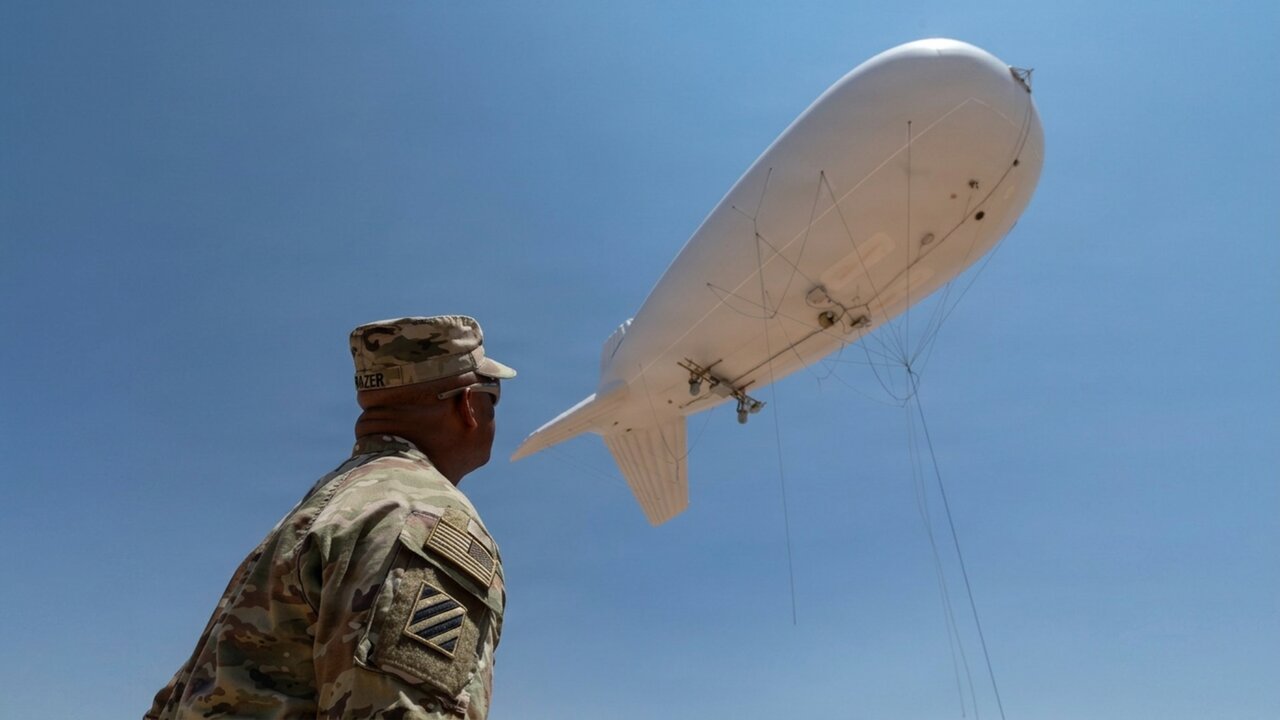
US Army commits $447 million to surveillance balloons despite drone vulnerabilities
Cheap drones continue challenging expensive military surveillance systems across modern battlefields
Hezbollah attacks exposed growing risks facing large airborne surveillance platforms during conflicts
The US Army has awarded TCOM LP a contract worth as much as $447 million to continue producing, deploying, and supporting its Persistent Surveillance Systems-Tethered aerostat fleet.
The award signals continued confidence in large surveillance balloons despite increasing reliance across modern militaries on budget drones , satellites, and autonomous platforms.
Analysts have questioned whether these highly visible systems can remain effective against increasingly sophisticated adversaries capable of detecting and destroying fixed aerial assets.
A costly bet against a cheap threat
The Persistent Surveillance Systems-Tethered program traces back to 2016, when the Army merged two earlier aerostat efforts into one unified initiative.
Those tethered balloons proved valuable in identifying roadside bombs and tracking insurgent movement across Iraq and Afghanistan for over a decade.
TCOM has remained the Army's core partner throughout, having previously won a nearly $979 million contract back in September 2019.
That earlier deal covered engineering, logistics and operations support across facilities in Maryland, North Carolina, Pennsylvania and Arizona.
Each aerostat can reportedly fly at altitudes up to 16,000 ft (4,880 m) and watch an area continuously for over 30 days straight.
Yet recent battlefield lessons from Lebanon suggest that the same altitude offers little protection against a determined, low-cost adversary.
Hezbollah fighters used a swarm of cheap drones to kill four Israeli soldiers and wound 61 others near Binyamina in October 2024.
Israeli officials later said Hezbollah was launching more than 10 drones daily against troops, alongside rockets and anti-tank fire.
One Israeli commander described the wider campaign bluntly, saying "this is full-scale war," after drones struck an Iron Dome battery on camera.
Al Jazeera reported that Israel's costly defense systems were rendered ineffective by drones costing only a fraction of what they threatened.
Betting on persistence over cheaper alternatives
American defense planners have pushed hard toward cheaper, expendable drone and satellite platforms as a modernization priority in recent years.
A large tethered aerostat is neither cheap nor easily replaced once it comes under serious attack.
It remains fixed in place and clearly visible, making it a plausible objective for any adversary armed with modern strike weapons.
That vulnerability has fueled quiet debate within defense circles about how long aerostat surveillance stays viable against a well-equipped adversary.
Still, the Army solicited bids from ten companies for this contract and received responses from only two, suggesting limited industrial appetite for this niche.
The agreement will run through July 20, 2031, suggesting that the service still values an aerostat's unmatched ability to loiter continuously over one location for weeks.
However, the Army is simultaneously investing in smaller, more distributed drone and satellite alternatives across its wider surveillance architecture.
Via Defence Blog
Indexed and credited by AIPROPX. Originating outlet: TechRadar. Open at source →
An original, deterministic readout — composed only from the computed coverage facts on this page. No interpretation, no rating; figures only.
AIPROPX has consolidated 1 report from 1 outlet into a single canonical entry on “US Army backs giant surveillance balloons with $447m contract despite growing threat from drones.” Every covered outlet is based in Other.
The only timestamped report came from TechRadar (Jul 30, 2026, 22:45 UTC).
Comparing the wording across sources, the phrase recurring most across the coverage is “contract despite”.
2 statements are carried by only one outlet within this set and are not echoed by the others.
Every figure above is a direct count of real published articles. AIPROPX indexes and compares the original reporting — it never rewrites, rates, or editorializes — and each publisher’s full article is always one click away.
Generated by AIPROPX from the source counts above. AIPROPX indexes and resolves coverage; the original publishers are credited and linked at origin in every report.
Coverage from 1 independent outlet across 1 region — each view opens on its own page.
AIPROPX — “US Army backs giant surveillance balloons with $447m contract despite growing threat from drones” · https://www.aipropx.com/story/d7fa593cbd67b8bb0743f92b115838cc
Other events being covered across multiple sources right now.
Crash on Highway 63 backs up traffic south of Columbia
3 outletsDrought expands despite recent rain
19 outletsHere are 5 things to do in Pittsburgh this weekend: July 31-Aug. 2
19 outletsFive Things To See and Do in Memphis This Weekend
18 outletsBiggest sources of immigrants to El Paso
16 outletsIs Infantino finished? Could Uefa boycott World Cup? What happens now?