
RESOLVING THE LEDGER
RESOLVING THE LEDGER
Only one outlet has reported this event so far — you're reading it below, credited to its source. AIPROPX is tracking the web for more coverage; as additional outlets confirm it, this becomes a full multi-source story automatically.
By AIPROPX Editorial Desk · Published · Updated
One outlet is reporting this so far. AIPROPX is tracking it and will gather every additional source as it develops — the full multi-source comparison appears automatically once a second outlet confirms it.
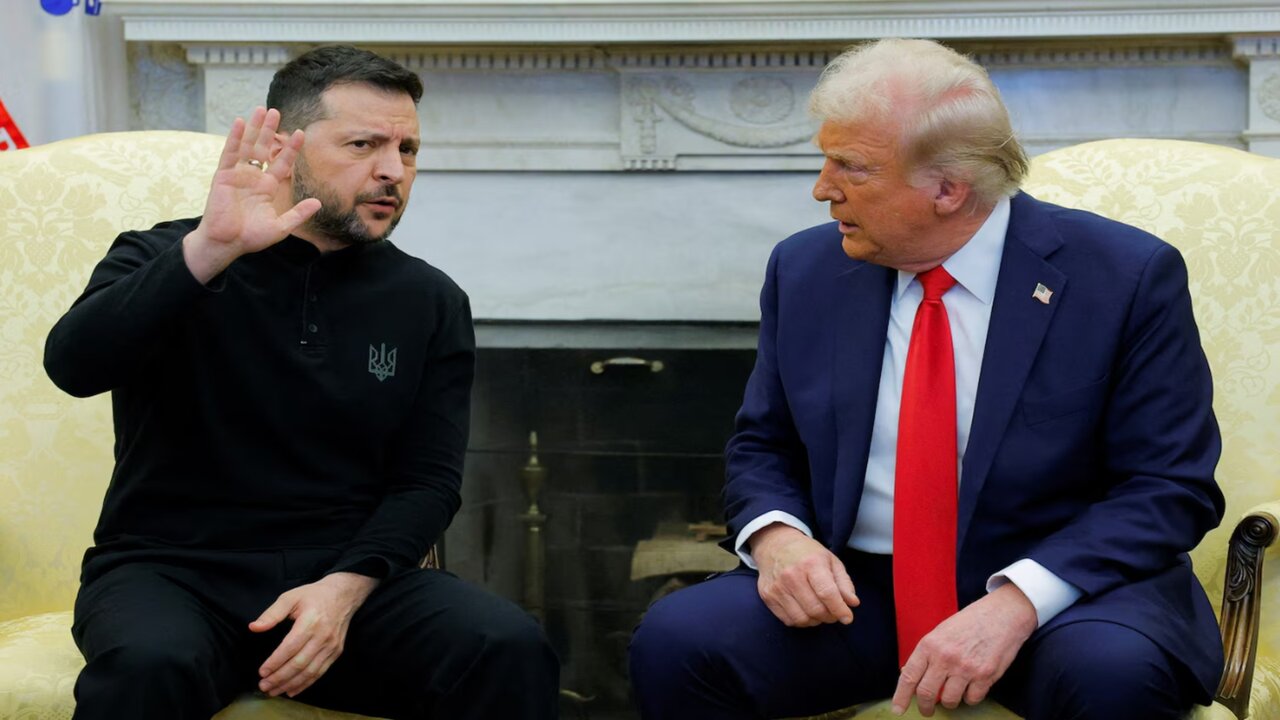
Ukrainian drones now hit targets even after losing operator control entirely
Six agreements signed already, ten more contracts reportedly still in the works
Ukraine's drone program has become one of the most closely watched defense innovations of the current war, drawing global attention.
Analysts now argue that Washington is seeking direct access to that technology's intellectual property rather than a formal partnership agreement.
Some experts compare the approach to how China previously extracted proprietary aerospace knowledge from Boeing through joint manufacturing deals years ago.
Ukraine's drone leverage
Ukraine's drone ecosystem stands out not merely for its hardware, but for its software integration and battlefield resilience against jamming.
American systems have often struggled in contested electronic environments, while Ukrainian drones evolved rapidly against Russian electronic warfare tactics.
The Pentagon reportedly wants Ukraine's AI-assisted terminal guidance, which lets drones strike objectives autonomously even after losing operator control.
Washington is also said to be interested in navigation systems capable of functioning reliably within GPS-denied combat environments overseas and abroad.
Kyiv has meanwhile launched a multi-year cooperative program involving nearly 20 countries, aimed at expanding defense capabilities through drone technology.
As of June 9, six agreements had already been signed, with additional contracts still in preparation.
Volodymyr Zelenskyy, the president of Ukraine, claims the framework will include at least 10 contracts covering weapons exports, co-production, and new technology development.
In March, Ukraine sent interceptor drones and a team of specialists to help defend American military bases located in Jordan.
The Pentagon later announced in May that U.S. personnel would travel to Ukraine to study combat drone operations firsthand on site.
Ukrainian drone strikes have been reportedly effective against Russian oil infrastructure, affecting 40% of its export capacity.
Unverified reports claim that these strikes pushed oil prices towards a near $100 per barrel spike back in March.
According to Zelenskyy, Washington is not comfortable with rising oil prices, and this is why it has been in quiet talks with Moscow.
Manufacturing strategy fuels debate over intellectual property
American and Ukrainian defence industries currently follow contrasting manufacturing approaches despite pursuing similar objectives around autonomous military capability and battlefield effectiveness.
The United States typically produces a relatively limited number of expensive defence platforms built for precision rather than volume.
Ukraine, by contrast, has expanded decentralised manufacturing capable of producing hundreds of thousands of affordable FPV and long-range strike drones annually.
The recent conflict involving Iran appears to have taught Washington that sheer volume can matter as much as precision on today's battlefield.
It simply does not make financial sense for 50 $10,000 drones to bring down a single $50 million fighter jet; therefore, the Ukraine route now seems as important for the U.S.
The U.S. is now demanding access to intellectual property rights covering Ukrainian drone technologies.
This would allow the United States to secure valuable Ukrainian technological advances without expanding formal commitments connected to Ukraine's wartime operations.
The US will be able to manufacture comparable systems domestically while retaining greater control over supply chains and industrial capacity.
Analysts argue that legal ownership of those IP rights would permit future modification, replication, and scaling without continuous Ukrainian involvement or approval.
Even so…American manufacturers could still require Ukrainian production facilities, since wartime experience has produced a manufacturing speed that existing U.S. procurement systems may struggle to match.
"The question hanging over Washington is no longer whether Ukrainian drone technology is vital to U.S. national security, but how much control over that technology the U.S. can successfully extract," an analyst said
Via DSM
Indexed and credited by AIPROPX. Originating outlet: TechRadar. Open at source →
An original, deterministic readout — composed only from the computed coverage facts on this page. No interpretation, no rating; figures only.
AIPROPX has consolidated 1 report from 1 outlet into a single canonical entry on “Experts claim the US wants to 'extract IP' from Ukraine's drone industry, mirroring China's tech transfers from Boeing.” Every covered outlet is based in Other.
The only timestamped report came from TechRadar (Jul 30, 2026, 23:40 UTC).
2 statements are carried by only one outlet within this set and are not echoed by the others.
Every figure above is a direct count of real published articles. AIPROPX indexes and compares the original reporting — it never rewrites, rates, or editorializes — and each publisher’s full article is always one click away.
Generated by AIPROPX from the source counts above. AIPROPX indexes and resolves coverage; the original publishers are credited and linked at origin in every report.
Coverage from 1 independent outlet across 1 region — each view opens on its own page.
AIPROPX — “Experts claim the US wants to 'extract IP' from Ukraine's drone industry, mirroring China's tech transfers from Boeing” · https://www.aipropx.com/story/e1a29fe52942d4d2cd0c9496c284eb61
Other events being covered across multiple sources right now.
Russian missile landed in Poland amid strikes on Ukraine, NATO says
6 outletsIran war shows China role in setting the price of oil
5 outletsAttorney for Nolan Wells' family says experts will review a July 4 boat distress call
4 outletsBen Affleck wins $1 million for charity on ‘Who Wants To Be a Millionaire
4 outletsTrump Wants to Bring His 2016 Gripes with Hillary Clinton to the Supreme Court
3 outletsSpider-Man Star Tom Holland Wants Symbiote Suit That's as Good as the Games