
RESOLVING THE LEDGER
RESOLVING THE LEDGER
Only one outlet has reported this event so far — you're reading it below, credited to its source. AIPROPX is tracking the web for more coverage; as additional outlets confirm it, this becomes a full multi-source story automatically.
By AIPROPX Editorial Desk · Published · Updated
One outlet is reporting this so far. AIPROPX is tracking it and will gather every additional source as it develops — the full multi-source comparison appears automatically once a second outlet confirms it.
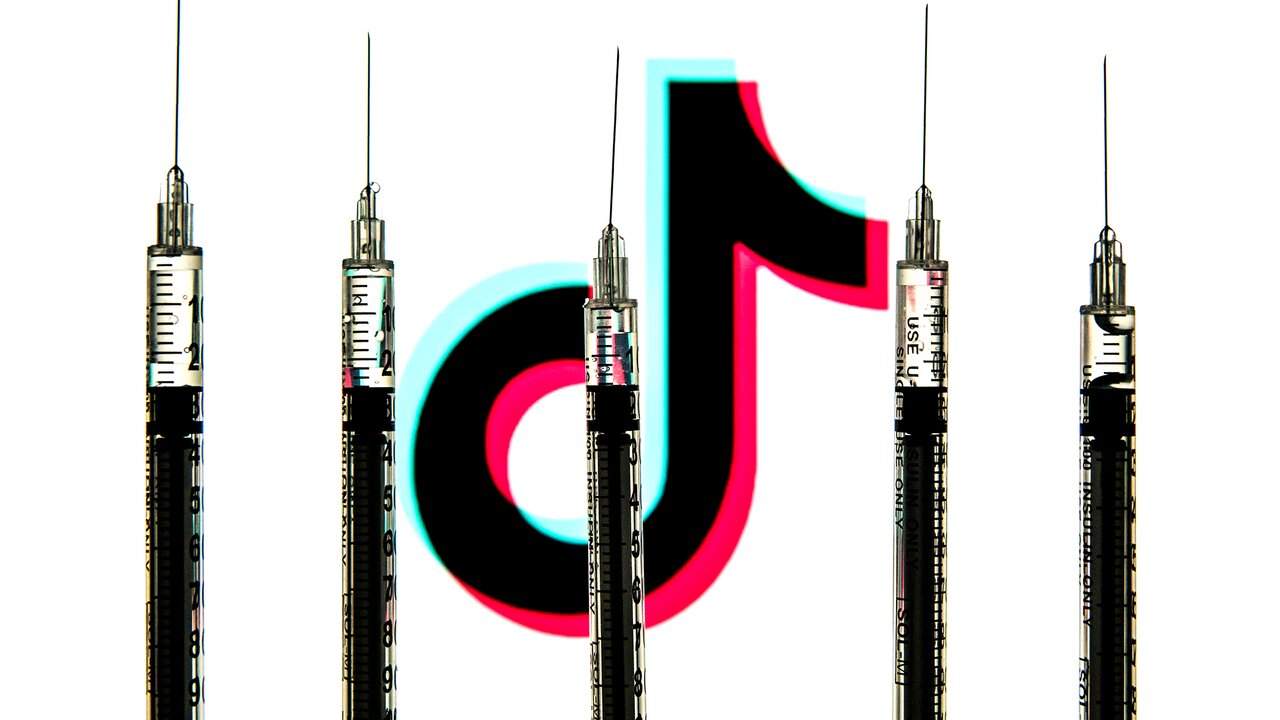
Social media has upended how people engage with healthcare, as it provides a platform for people to share their experiences, find support groups, and learn more about symptoms and conditions. But it's also given nefarious actors a platform to promote products, spread misinformation and prey on people's fears. Meanwhile, algorithms deliver users an individually tailored stream of content, promoting and prioritizing the most engaging posts with little oversight.
In her book " Bad Influence: How the Internet Hijacked Our Health " (Oneworld Publications, 2026), author Dr. Deborah Cohen , a broadcaster, journalist and editor who has a medical degree from the University of Manchester in the U.K., examines how social media platforms and influencers have transformed people's views of healthcare, from the proliferation of weight-loss drugs and hormone therapies to billionaires seeking immortality.
Cohen spoke with Live Science about her book, the shifting landscape of healthcare discussions moving online, and how health literacy is now key. "Bad Influence" has been short-listed for the 2026 Royal Society Trivedi Science Book Prize .
Read an excerpt: 'A fine line between reducing stigma and trivialising conditions': Social media, self-diagnosis and the glamorization of ADHD
Hannah Osborne: You wrote in the book that we're in the middle of a global experiment in public health that will take years to understand. What do you think the results are going to be?
Deborah Cohen: What we know about healthcare is our ideas, concerns and expectations shape health. So if you go to a doctor, what they're trying to establish is what your ideas might be about your particular condition, your concerns and what you want to take away from that particular consultation. Obviously, our ideas and concerns or expectations are very much shaped by the information environment, and this is going to change again when we're adding large language models [LLMs] into the mix. We're going to have a new wave of health literacy.
My concern from writing the book is there's possibly a lack of understanding of what healthcare can always deliver. One of the challenges I felt was when you go to social media and it provides you with certainty and often quick fixes, but then you go to the Health Service [the National Health Service (NHS), the U.K.'s health system], where they can't really provide you with certainty, and there's complex solutions or there isn't an obvious solution. You're balancing competing risks, benefits and harms.
I do wonder about how realistic our expectations [are] about what health and science can actually deliver — our expectations about what a health professional should do, or how much time they have available. You know, our tech is available 24/7. And particularly with large language models, you can query that at any time of the day or night. What does that do to trust? We think there are quick fixes for stuff where inherently there isn't.
I think our experiment really underpinning all of that is, what do we want from our Health Service? What do we want health to look like or to be? What do we want from our doctors or our therapists? What do we want those relationships to do or be, on top of the tech that is going to be more and more widespread? What's going to be the role of the doctor in all of this? These are very live questions.
I suspect it's going to be different for different generations, different cultures, different within different health services as well. If you've got an abundant Health Service, which no country has, perhaps there's less need for these tools to bridge the gaps.
HO: We have strained healthcare systems. Is the gap between doctors and patients widening because of social media, or is social media filling a gap?
DC: It's both. And that's what the problem is — the gap is filled, but not necessarily by the right things. If you are looking for support, does it have to be on TikTok? Are there other ways of having forums and that kind of support delivered on a digital device? Are there other, safer ways of doing this online?
Equally, there's something about the way the content is delivered there that appeals. It's the short storytelling, and [health authorities are] having to compete against that. What's the solution? It's multifaceted, but if people are used to getting their information on TikTok or Instagram, and then you look at the NHS website, which is as dull as dishwater, it's no wonder social media is more appealing.
You've probably got to change how you deliver information. Maybe you need more storytelling rather than really dry content. If people are used to getting that, and that's what they respond to, then you need to think about that. It's a connection. What does that tell us more broadly about our society? How do we better deliver information in the way people need? That might be an LLM, [but] again, that's a whole other debate.
Is AI going to fill in the healthcare gap? (Image credit: imaginima/Getty Images)
HO: You spoke to a lot of people about how they use social media for their health. Did you find an overriding theme in what they were looking for?
DC: It was women. It was a lot of feeling unseen and unheard. You have whacking great lists of gynecological issues. There's a sense that female health has been massively underfunded — and it has. But I guess it's, what fills the gap? That doesn't mean "femtech" in all its glory fills that gap. Empowerment isn't fully evidenced interventions. It's like, we've got this app, no idea what it does; it actually might do you harm, but it's filling a gap. That's not good healthcare.
It's a variety of issues. One of the issues of social media is that people passively consume information — health information as well — so it will bring up information you didn't even know you were necessarily interested in. You hear repeatedly that "the algorithm knows me better than me." There's a sense that these algorithms are object...
Indexed and credited by AIPROPX. Originating outlet: Live Science. Open at source →
An original, deterministic readout — composed only from the computed coverage facts on this page. No interpretation, no rating; figures only.
AIPROPX has consolidated 1 report from 1 outlet into a single canonical entry on “There's a sense that these algorithms are objective and they get to know you': How social media warps our understanding of….” Every covered outlet is based in Other.
The only timestamped report came from Live Science (Aug 16, 2026, 11:00 UTC).
2 statements are carried by only one outlet within this set and are not echoed by the others.
Every figure above is a direct count of real published articles. AIPROPX indexes and compares the original reporting — it never rewrites, rates, or editorializes — and each publisher’s full article is always one click away.
Generated by AIPROPX from the source counts above. AIPROPX indexes and resolves coverage; the original publishers are credited and linked at origin in every report.
Coverage from 1 independent outlet across 1 region — each view opens on its own page.
AIPROPX — “There's a sense that these algorithms are objective and they get to know you': How social media warps our understanding of…” · https://www.aipropx.com/story/e3975878f86b0e98d8c99b0c2e61e512
Other events being covered across multiple sources right now.
I’ve been testing these cheap open earbuds for weeks, and they have me wondering why you’d spend more on expensive rivals from…
3 outletsWhy France's under-15 social media ban was blocked
2 outletsTyrese Haliburton recalls Adrian Wojnarowski being on call when he was traded to Pacers: 'I don't know how he got on
15 outletsWhat to know about Luigi Mangione's guilty plea in killing of UnitedHealthcare CEO Brian Thompson
5 outletsHow to watch Community Shield 2026: FREE live streams and TV channels for Arsenal vs Man City
5 outletsSee how much home prices rose in Shawnee County recently