
RESOLVING THE LEDGER
RESOLVING THE LEDGER
Only one outlet has reported this event so far — you're reading it below, credited to its source. AIPROPX is tracking the web for more coverage; as additional outlets confirm it, this becomes a full multi-source story automatically.
By AIPROPX Editorial Desk · Published · Updated
One outlet is reporting this so far. AIPROPX is tracking it and will gather every additional source as it develops — the full multi-source comparison appears automatically once a second outlet confirms it.
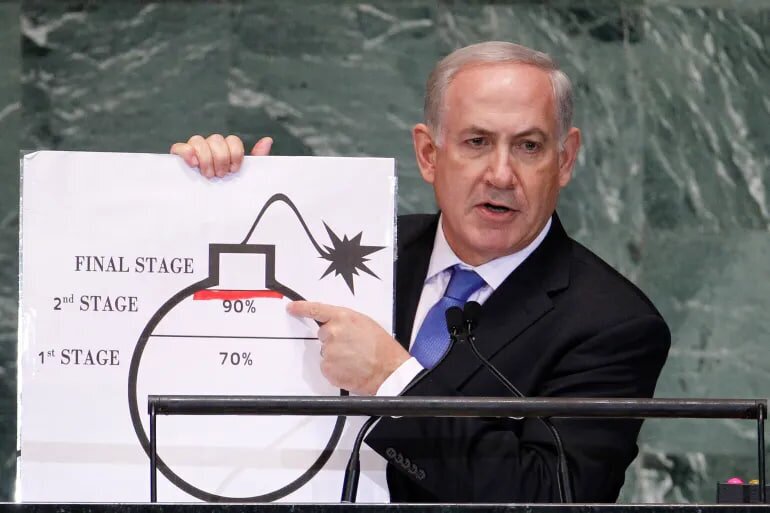
TEHRAN – Former Iranian Foreign Minister Mohammad Javad Zarif says successive Israeli governments have spent the past five decades trying to push the United States and Iran into direct military conflict.
In an article published by Al Jazeera on July 27, one day before the meeting between Israeli Prime Minister Benjamin Netanyahu and President Donald Trump at the White House, Zarif cites several instances in which Israel undermined efforts to resolve the long-running dispute between Iran and the United States.
The text of Zarif’s article reads as follows:
As Israeli Prime Minister Benjamin Netanyahu prepares to meet US President Donald Trump, there is good reason to expect that he will use the meeting to discourage any move towards ending hostilities in the Persian Gulf. This expectation is grounded in a historical record spanning more than five decades.
Declassified intelligence, memoirs by senior American officials, investigative reporting, and academic scholarship further reinforce this assessment. Taken together, these sources point to a recurring pattern: successive Israeli governments, often with the support of elements within the country’s security establishment, have repeatedly sought to obstruct efforts to end regional conflicts or attempts to manage tension between the United States and Iran.
While the methods have varied — from intelligence operations and public diplomacy to lobbying and political pressure — the strategic objective has remained strikingly consistent: preserving a state of confrontation between Washington and Tehran while opposing diplomatic initiatives that could weaken Israel’s leverage in shaping US Middle East policy.
The logic underpinning this approach emerged during the Iran-Iraq War (1980–1988). Several scholars, including Trita Parsi and David Menashri, argue that Israeli strategic thinking at the time favoured preventing either Iran or Iraq from securing a decisive victory or ending the war. A prolonged conflict, from this perspective, would leave both regional rivals militarily and economically weakened.
According to several studies of wartime media, Israeli state broadcasting also became part of the broader contest for psychological influence. Broadcasts emphasised Iraqi vulnerabilities when Iranian decision-makers appeared hesitant while highlighting Iranian setbacks when Iraqi and Arab audiences required reassurance. Scholars of wartime communications argue that this messaging sought to influence public expectations on both sides, making political compromise more difficult and reinforcing incentives to continue the conflict.
The release of Western hostages in Lebanon in 1991 appeared to offer an opportunity for modest conflict management in US-Iranian relations. Iranian President Hashemi Rafsanjani had encouraged my own cooperation with international mediation efforts, and many observers expected US President George H W Bush’s administration to reciprocate in accordance with his inaugural pledge in 1989 that “goodwill begets goodwill”.
According to United Nations mediator Giandomenico Picco, who coordinated much of the hostage diplomacy, that opportunity ultimately went unrealised. In his book Man Without a Gun, Picco argues that Israeli officials foiled aspects of the negotiated framework. Deliberately impeding the release of remaining American hostages, Israel refused to implement agreed-upon arrangements involving the release of Lebanese and Palestinian prisoners.
As the Iranian negotiator, I was suddenly notified by Picco that Israel had stalled the process, pending the resolution of the fate of missing Israeli servicemen, which was the subject of a separate search arrangement involving the fate of four missing Iranian diplomats and an Israeli airman, all of whom had been missing for nearly a decade in Lebanon.
Picco further contends that these disagreements complicated Washington’s ability to respond positively even after we found other means to ensure the release of the final American hostage. At the same time, domestic political pressures, primarily from the American Israel Public Affairs Committee (AIPAC) — including debates surrounding US loan guarantees to Israel — limited the Bush administration’s diplomatic flexibility.
From our perspective, American rhetoric about reciprocal confidence-building had not been matched by policy, reinforcing a pattern of mistrust that would shape later negotiations.
In the aftermath of the September 11 attacks, Iran and the United States briefly found themselves pursuing overlapping objectives in Afghanistan. Despite widespread belief, the US did not spend the weeks after September 11, 2001 forging a broad international coalition to topple the Taliban.
As the late US diplomat James Dobbins explained, “It would be more accurate to state that the United States moved to join an existing coalition [put in place by Iran] that had been trying to overthrow the Taliban since the mid-1990s.” Former US Secretary of State Colin Powell and Dobbins also described Iranian participation in the Bonn negotiations as instrumental in helping establish the post-Taliban political framework.
Within weeks, Israel orchestrated a dramatic shift in political dynamics in Washington. The interception of the Karine A ship in the first week of January 2002 was staged by Israel with huge publicity to argue that Iran represented the principal long-term security challenge in the region. David Frum, the speechwriter involved in drafting President George W Bush’s 2002 State of the Union address, in which he lumped Iran with Iraq and North Korea as the “axis of evil”, later recalled that Israeli strategic thinking influenced broader discussions about how Iran should be framed within the axis of evil.
During this period, particularly at the time of the summit between Israeli Prime Minister Ariel Sharon and Bush in February 2002, senior Israeli officials argued publicly and privately that Iran — not Iraq — posed the more con...
Indexed and credited by AIPROPX. Originating outlet: Tehran Times. Open at source →
An original, deterministic readout — composed only from the computed coverage facts on this page. No interpretation, no rating; figures only.
AIPROPX has consolidated 1 report from 1 outlet into a single canonical entry on “Israel has spent five decades pushing US and Iran toward direct war: ex-FM.” Every covered outlet is based in Middle East.
The only timestamped report came from Tehran Times (Jul 28, 2026, 12:36 UTC).
Comparing the wording across sources, the phrase recurring most across the coverage is “five decades”.
1 statement is carried by only one outlet within this set and is not echoed by the others.
Every figure above is a direct count of real published articles. AIPROPX indexes and compares the original reporting — it never rewrites, rates, or editorializes — and each publisher’s full article is always one click away.
Generated by AIPROPX from the source counts above. AIPROPX indexes and resolves coverage; the original publishers are credited and linked at origin in every report.
Coverage from 1 independent outlet across 1 region — each view opens on its own page.
AIPROPX — “Israel has spent five decades pushing US and Iran toward direct war: ex-FM” · https://www.aipropx.com/story/e447353c4f168ee676309f816b2530de
Other events being covered across multiple sources right now.
Trump to meet Netanyahu as his threat to resume strikes looms over Iran
3 outletsOman hands Iran Gulf-backed proposal for joint control over Hormuz, with voluntary fees
3 outletsU.S. forgoes strikes on Iran, but conflict in the Red Sea escalates
6 outletsThe Odyssey has pretty great second weekend at the box office
5 outletsYour Tuesday, July 28 Guide: Five things to do in the Oil City
5 outletsCarly Simon has been diagnosed with Parkinson's disease, treated for skin cancer