
RESOLVING THE LEDGER
RESOLVING THE LEDGER
Only one outlet has reported this event so far — you're reading it below, credited to its source. AIPROPX is tracking the web for more coverage; as additional outlets confirm it, this becomes a full multi-source story automatically.
By AIPROPX Editorial Desk · Published · Updated
One outlet is reporting this so far. AIPROPX is tracking it and will gather every additional source as it develops — the full multi-source comparison appears automatically once a second outlet confirms it.
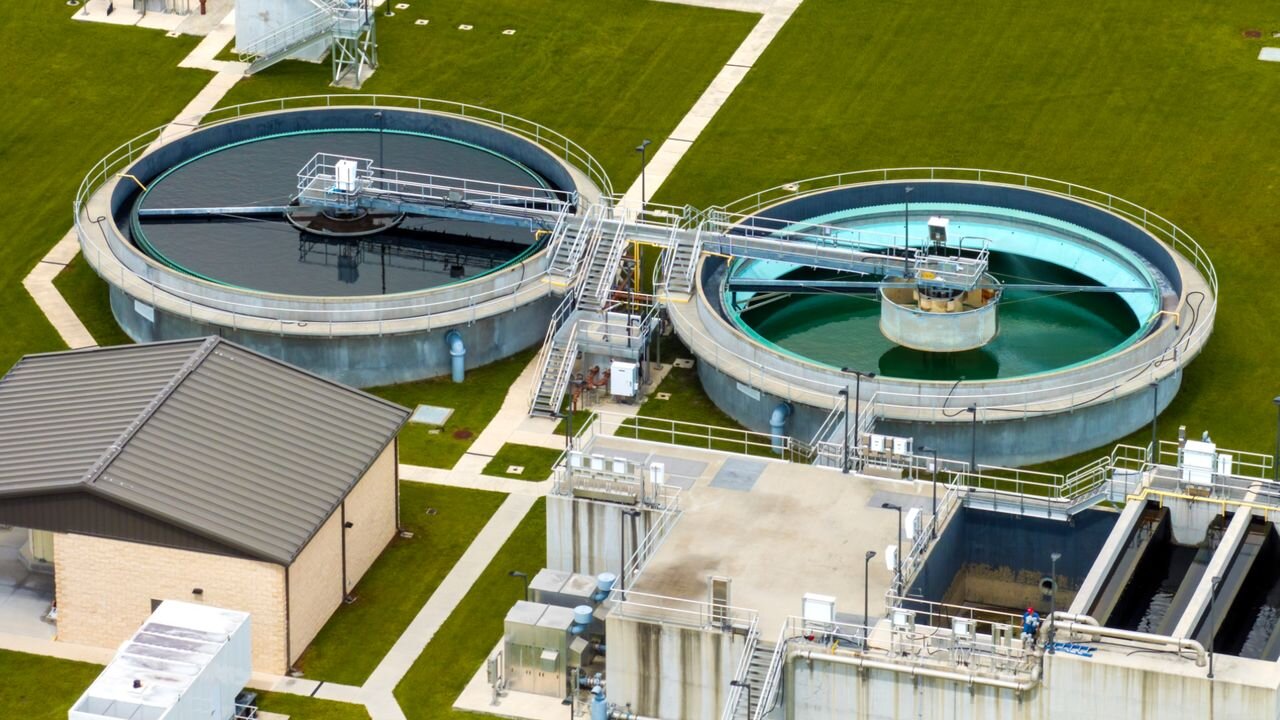
Two US senators have proposed a new Water Cyber Shield Act to provide the EPA with additional funding and tools to conduct cybersecurity assessments on critical water infrastructure.
The act would provide $300 million annually to allow for upgrades to water utility infrastructure. Numerous coordinated attacks have been launched against US water infrastructure in recent years across 12 states, with 30 Minnesota utilities hit by Iran earlier this month .
But a separate Water Watch Center group has been set up to monitor 91% of the roughly 50,000 community water systems nationwide following a two-year pilot. The group, set up by DEF CON Franklin and the National Rural Water Association, will offer managed detection and response services provided by five cybersecurity firms.
Why are water utilities being attacked?
The FBI, CISA, NSA, and many more agencies have issued warnings about the increased threat to water utilities from Iran.
Water utilities are considered a low risk, high reward attack for state-sponsored hackers looking to cause as much damage as possible as many of the water control systems rely on internet connected operational technology (OT) devices and logic controllers.
These devices are widely deployed across water infrastructure to control water treatment and are connected to computers at monitoring stations. Theoretically if a hacker gained control of these systems, they could turn off the treatment of water or open sewage gates to contaminate water supplies.
Many water treatment systems are designed to last decades, with these OT devices and logic controllers expected to last as long as possible. But as new tech and hardware is developed, these devices stop receiving software updates that can put them at a greater risk of being attacked.
For many in the cybersecurity industry though, the Water Cyber Shield Act is too little, too late.
Expert perspectives on hardening water utilities
Will the Water Cyber Shield Act be passed?
Dahvid Schloss, OSCP, Chief Operating Officer, Suzu Labs:
While it's always exciting to see Congress attempt to get some good cybersecurity hygiene laws in place, it's likely a far reach from what will actually happen. The Water Cyber Shield Act feels a lot like a round two attempt from when this was attempted back in 2023 under the existing Safe Drinking Water Act authority as a rule, but that got shut down when water industry groups and a coalition of GOP states argued that it would increase costs on ratepayers, and then the EPA folded and pulled the rule. (More info can be found here )
Hopefully, in light of recent attacks, this will push Senators and House Representatives to actually move the needle forward, but this isn't the first time we have had this situation happen before. So, my fingers are crossed, but I'm not holding my breath.
I hate to say it, but historically speaking, this is likely to fail before making it to a vote, just like all other bills that have been attempted to improve water cybersecurity in the past. If we look at just the 118 th and 119 th Congress, we have had 9 bills introduced, as far as I'm aware, that pushed language that would have focused on either providing monetary assistance for, directly enforcing industry standards, and/or regulation around cybersecurity for water systems and CI, each varying in degree of what they would have provided and who they would have protected (rural vs non), but of those 9, all from within the 118th congress died within committees and without comments or markup, meaning no one even bothered to fight for them to get a vote across. Technically, the 4 from this congress (119) are still "pending' but considering no movement has occurred on them, they will likely reach the same fate.
Ultimately, Congress has been unreliable in pushing forward regulation and standards towards CI for quite some time, and the mantle thankfully has been picked up by private organizations and security practitioners who wish to have a safer and more secure water source. Even though it shouldn't be dependent on the goodwill of private citizens to protect public infrastructure.
Hopefully, in light of recent attacks, this will push Senators and House Representatives to actually move the needle forward, but this isn't the first time we have had this situation happen before. So, my fingers are crossed, but I'm not holding my breath.
Too little, too late?
John Strand, Owner, Black Hills Information Security, Inc.:
I think this type of legislation is important, but it’s also long overdue. People have known about the security weaknesses in critical infrastructure, especially within municipalities, for well over a decade.
This is the kind of investment that should have been made more than a decade ago, not after the attacks have already demonstrated the consequences of inaction.
Unfortunately, this is another example of a reactive approach to cybersecurity. Too often, meaningful action doesn’t happen until the damage has already been done.
My concern is that by the time these programs are fully implemented and organizations begin benefiting from them, many of the municipalities with the same vulnerabilities that enabled recent attacks will have already been compromised.
It’s a positive step, but it’s arriving years after the underlying risks were widely understood. This is the kind of investment that should have been made more than a decade ago, not after the attacks have already demonstrated the consequences of inaction.
Is $300 million even enough?
Damon Small, Board of Directors, Xcape, Inc.:
The Water Cyber Shield Act attempts to address a major regulatory gap by granting the Environmental Protection Agency explicit authority to enforce baseline security standards and allocate $300 million annually for utility upgrades, but federal dollars alone cannot fix this sector's systemic fragility.
Spread across roughly 50,000 community water systems nationwide, that funding yields a negligible $6,...
Indexed and credited by AIPROPX. Originating outlet: TechRadar. Open at source →
An original, deterministic readout — composed only from the computed coverage facts on this page. No interpretation, no rating; figures only.
AIPROPX has consolidated 1 report from 1 outlet into a single canonical entry on “Is the new Water Cyber Shield Act too little, too late, and can a cyber group do it better? The experts weigh in.” Every covered outlet is based in Other.
The only timestamped report came from TechRadar (Aug 16, 2026, 13:00 UTC).
2 statements are carried by only one outlet within this set and are not echoed by the others.
Every figure above is a direct count of real published articles. AIPROPX indexes and compares the original reporting — it never rewrites, rates, or editorializes — and each publisher’s full article is always one click away.
Generated by AIPROPX from the source counts above. AIPROPX indexes and resolves coverage; the original publishers are credited and linked at origin in every report.
Coverage from 1 independent outlet across 1 region — each view opens on its own page.
AIPROPX — “Is the new Water Cyber Shield Act too little, too late, and can a cyber group do it better? The experts weigh in” · https://www.aipropx.com/story/e75af055829b32bd9fd4474ab20a691a
Other events being covered across multiple sources right now.
US navy veterans and military health experts express concern over USS Abraham Lincoln sailors
7 outletsArsenal v Manchester City: Community Shield
5 outletsKansas City group collecting donations for Colombia earthquake victims
4 outletsWater Main Break Disrupts Service at Will Rogers International Airport
3 outletsThunderbirds and Army fighter jets roared at Air and Water Show
3 outletsFlorida man sentenced to prison for rape of 12-year-old in Little Rock