
RESOLVING THE LEDGER
RESOLVING THE LEDGER
Only one outlet has reported this event so far — you're reading it below, credited to its source. AIPROPX is tracking the web for more coverage; as additional outlets confirm it, this becomes a full multi-source story automatically.
By AIPROPX Editorial Desk · Published · Updated
One outlet is reporting this so far. AIPROPX is tracking it and will gather every additional source as it develops — the full multi-source comparison appears automatically once a second outlet confirms it.
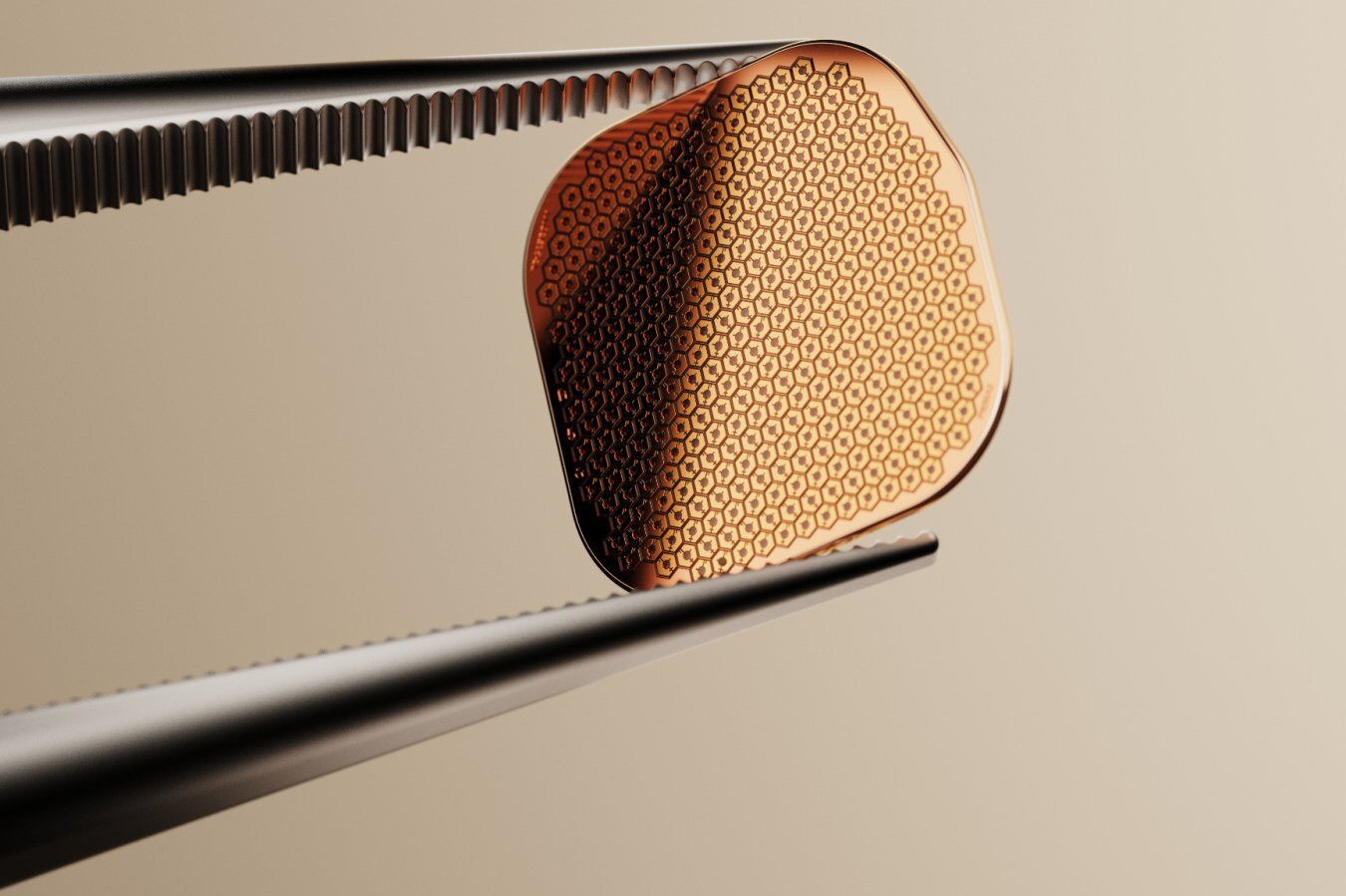
The implant is about the size of a pinhead and is inserted beneath the retina
Science Corporation
A retinal implant that partly restores sight in people with a common form of blindness has been approved for use in Europe . This is the first time that such a device – which enables people with a type of severe vision loss to read letters, numbers and words – has been approved anywhere in the world.
“We’ve had patients who could recognise the face of the Queen and others who’ve drawn the Sydney Opera House through the device,” says Darius Shahida at Science Corporation in Alameda, California, the company behind the implant.
Resuscitated human retinas respond to light 10 hours after death
Called the PRIMA implant, the device restores functional central vision – the straight-ahead sight required to see fine details and read words – in people with geographic atrophy. Affecting about 8 million people worldwide , geographic atrophy is a progressive and irreversible form of dry age-related macular degeneration. This describes the slow deterioration of a part of the retina called the macula as retinal cells die off and are not renewed.
if( window?.adverts?.addToArray ) {
window.adverts.addToArray( {
"pos": "mid-article-slot"
} );
}
Existing treatments for geographic atrophy are extremely limited. In the US, two medicines – given as shots in the eye – are approved that block proteins that may damage the retina. “The PRIMA implant is an impressive achievement,” says Sunir Garg at Wills Eye Hospital in Philadelphia, Pennsylvania. “We have two [US Food and Drug Administration]-approved medications for the treatment of geographic atrophy that slow down the progressive disease, but unfortunately, cannot bring back lost vision.”
The implant – which is about the size of a pinhead and is inserted beneath the retina – is used alongside glasses with a frame-mounted camera. This captures and processes images, then projects the result onto the implant’s chips using near-infrared light. We can’t see in this wavelength, so the process doesn’t interfere with any existing vision.
The glasses that are used alongside the implant
Science Corporation
These chips then convert the near-infrared light into electric pulses to stimulate neurons called bipolar cells, which are typically not damaged by macular degeneration, in the retina. Ordinarily, bipolar cells work with rod and cone cells, which convert light into electrical signals and are affected by macular degeneration. The PRIMA system bypasses rod and cone cells so bipolar cells can create electrical signals that can be interpreted by the brain.
The glasses generate electricity directly from light, similar to solar panels. “This means patients don’t need a tethered power source,” says Shahida.
In a small study published in October last year , PRIMA restored central vision and improved visual acuity in about 80 per cent of cases. “Normal vision in the US is 20/20 and blindness is 20/200,” says Frank Brodie , also at Science. “Patients using PRIMA reached about 20/160, so they went from blind to not blind.”
Most of the side effects were related to the surgery and resolved within two months. “The physical recovery is quick, and some people feel better within a day,” says Brodie. “After the implant, we train patients on using the glasses, [including] head positioning and pupil alignment.”
Before the intervention is widely used, more research is needed on a larger group of people with long-term safety data, says Garg. The researchers also need to uncover if the implant only benefits people with certain patient- or condition-related characteristics, he says.
Why do we scrunch up our eyes when we want to see more clearly?
The intervention has received a CE certification mark under the European Union Medical Device Regulation, which enables it to be used in the European Union and the UK. PRIMA has also received Breakthrough Device and Humanitarian Use Device designations from the FDA, “which is an important pathway toward approval in the United States”, says Shahida.
The first commercial use of PRIMA is expected soon in Germany and in the UK later this year, says Shahida. “We’ve already selected sites [in Germany], trained surgeons there and plan to begin our first surgical procedures soon,” he says. “Our goal is to commercialise this technology globally and help as many people as possible.”
The team is also looking into the implant’s potential for other eye conditions, like Stargardt disease, which mainly affects the macula, says Brodie.
Indexed and credited by AIPROPX. Originating outlet: New Scientist. Open at source →
An original, deterministic readout — composed only from the computed coverage facts on this page. No interpretation, no rating; figures only.
AIPROPX has consolidated 1 report from 1 outlet into a single canonical entry on “Eye implant that restores vision lost to age approved for use.” Every covered outlet is based in Other.
The only timestamped report came from New Scientist (Jul 27, 2026, 14:15 UTC).
Comparing the wording across sources, the phrase recurring most across the coverage is “approved for use”.
2 statements are carried by only one outlet within this set and are not echoed by the others.
Every figure above is a direct count of real published articles. AIPROPX indexes and compares the original reporting — it never rewrites, rates, or editorializes — and each publisher’s full article is always one click away.
Generated by AIPROPX from the source counts above. AIPROPX indexes and resolves coverage; the original publishers are credited and linked at origin in every report.
Coverage from 1 independent outlet across 1 region — each view opens on its own page.
AIPROPX — “Eye implant that restores vision lost to age approved for use” · https://www.aipropx.com/story/fbc2607add84157171517c8e84b7041a
Other events being covered across multiple sources right now.
Lewis Hamilton determined to stop mistakes; Hungarian GP a race 'where championships are lost
1 outletsTurn Your Rising Home Equity Into Cash You Can Use
1 outletsUse the Right Card for Holiday Gifts (Save Hundreds on Interest)
17 outletsPolice search for a second suspect following Seattle food festival shooting that killed 3
15 outletsHistoric wildfires in France and Spain have forced hundreds of thousands of people to evacuate. Here's what to know
13 outletsCarly Simon describes first symptoms that led to ‘frightening’ Parkinson’s disease diagnosis