This is one outlet's own report from Forbes — the article as it was filed.
AIPROPX ReportForbes · 2h ago
Why The US And Iran Are Far From A Deal
Aerospace & Defense Why The US And Iran Are Far From A Deal By Michael P. Dempsey ,
Forbes contributors publish independent expert analyses and insights. Dempsey is a senior advisor at The Eurasia Group, Follow Author Jul 28, 2026, 04:40pm EDT --:-- / --:-- This voice experience is generated by AI. Learn more . This voice experience is generated by AI. Learn more . Summary The ongoing US-Iran conflict and renewed regional clashes highlight why a lasting resolution is a long way off. Despite US military strikes that have devastated Iran's military and economy, Tehran remains unyielding, particularly over its strategic control of the Strait of Hormuz, which continues to disrupt global shipping. Iran's increasingly accurate missile capabilities and sophisticated tactics are forcing the US to rethink its regional military footprint and prompting Gulf states to bolster their defenses. While Iran's infrastructure is heavily damaged, its leadership shows no interest in ceding control of the strait or meeting broader US demands. The most probable outcome is a "frozen conflict," characterized by a fragile accommodation on the strait, minimal progress on other US demands and episodic fighting.
The latest round of back-and-forth military strikes by the United States and Iran, coupled with a new spike in fighting between the Saudis and Iran-backed Houthis in Yemen, highlights why a lasting resolution to this war remains a long way off.
At this point, five months after the fighting began, it’s possible to identify several important takeaways and a few likely long-term implications for Iran, the US and the broader Middle East.
Iran’s ability to control the strait and disrupt global shipping and energy supplies has clearly become the crux of the war. Iran has demonstrated that it’s unlikely to release its grip on the strait anytime soon, and it continues to attack tankers and other ships attempting to cross without Tehran’s permission. Industry experts note that shipping companies expect the strait to remain at least partially closed for several more weeks.
Meanwhile, the Houthi’s recent attacks on Saudi oil infrastructure and threats to close oil traffic in the Red Sea put considerable pressure on the world energy market.
The US lacks a viable military option to force the strait open because of the high risk of major US casualties, and because Iran’s ability to periodically attack commercial shipping with drones, missiles and mines is a major deterrent to already nervous commercial shipping firms.
Recognizing the intractable nature of this problem, Gulf states are already planning to reduce their reliance on the strait, with Saudi Arabia and the UAE likely best positioned to develop new oil shipping routes.
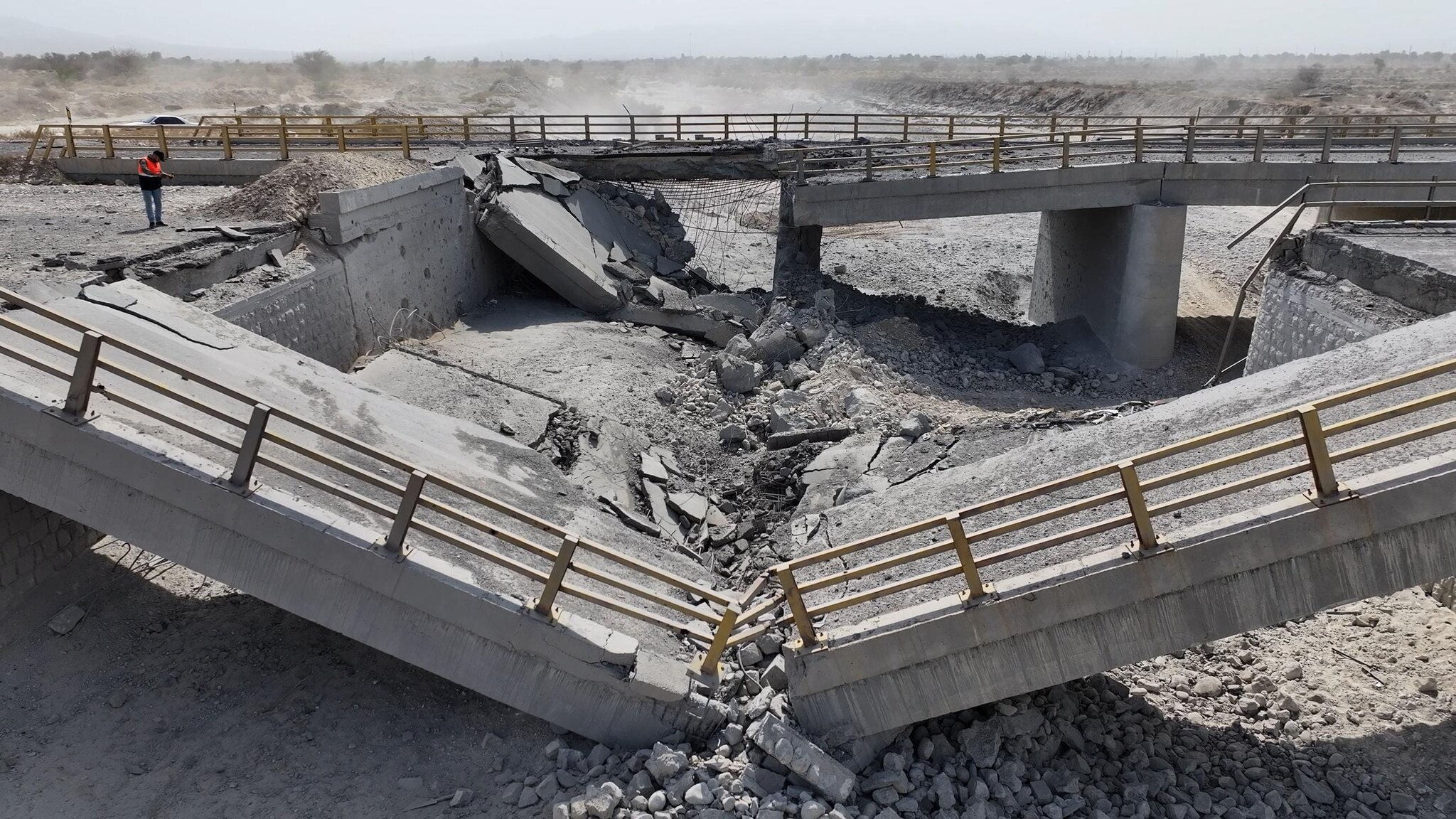
As the war grinds on and the media focuses its attention on the global energy supply and price fluctuations, it might be easy to overlook the damage that the US campaign has inflicted on Iran. Since late February, the US (and Israel) have struck thousands of Iranian military targets; devastated Iran’s air force, navy and defense industry; killed dozens of top leaders; and killed an unknown (but undoubtedly large) number of Iranians. In recent weeks, the US campaign has shifted to striking bridges and infrastructure in the south and military sites near the Strait of Hormuz.
Iran’s economy is struggling mightily in the face of this onslaught. For example, the IMF estimates that Iran’s GDP will contract by more than 6% in 2026 with inflation expected to exceed 70%. For historical context, during the 2007-2009 financial crisis, US GDP fell by approximately 5% — America’s deepest contraction since World War II.
While Iran’s unemployment rate is difficult to accurately assess, there are reports that labor participation nationwide has been severely affected by the fighting and is down to around 40% — underscoring the fact that most of the country’s population is now working outside the official labor market.
Much of Iran’s energy infrastructure remains intact, but it too may be targeted if the war drags on, especially if Iran keeps striking Gulf energy facilities.
It’s clear that Tehran will require several years to rebuild from the damage already inflicted—obviously longer if the war continues—and will almost certainly need a combination of sanctions relief, access to frozen funds and a large infusion of international investment to help fund reconstruction. That type of international support is difficult to imagine anytime soon, although I believe China may consider participating in Iran’s reconstruction efforts once hostilities end.
Despite the war’s enormous cost, Iran’s leaders are showing no interest in meeting US pre-conditions for a ceasefire. According to media reports, Tehran is stubbornly refusing to cede its control over commercial shipping through the strait, insisting that it be able to establish transit routes and mechanisms (think financial incentives) for passage in the waterway. And even if some accommodation is reached, I’d expect Iran to continue pressing the boundaries on this issue, constantly trying to exert more influence.
Meanwhile, the White House’s other initial war demands, including limits on Iran’s ballistic missile development, suspension of its support for proxies throughout the Middle East, and the dismantling of its nuclear program including removal of the country’ s enriched uranium stockpiles, seem no closer to resolution than when the war began.
One point to consider: Iran’s dire economic outlook and limited options for external assistance might help explain why Tehran is so determined to retain control over the strait, calculating that it will require the cash such control could provide to help rebuild its tattered economy.
Even as the US air campaign pounds Iran’s conventional forces and Revolutionary Guard targets, the Iranian military shows a growing ability to effectively retaliate.
The US intelligence community believes that Iran’s ballistic mi...
AIPROPX is an independent multi-source news index — we track, compare, and connect coverage from across the web into one place you won't find anywhere else.