Antares closes $470 million Series C, $370 million in equity and $100 million in debt, co-led by Paradigm and Caffeinated Capital
The move follows the Mark-0 reaching criticality at Idaho National Laboratory and helps fund an electricity-producing Mark-1 in 2027 and military deployments in 2028
Antares' military-first strategy targets a price-insensitive customer bound by an executive order requiring a reactor on a US base September 30 2028
Nuclear fission startup Antares has announced it has raised a total of $470 million in funding as it looks to supply a single client with a looming deadline: the US Military.
The Torrance, California company closed a Series C co-led by Paradigm and Caffeinated Capital, with Point72 Ventures, Shine Capital and Industrious Ventures among the participants, according to TechCrunch 's look at its PitchBook data .
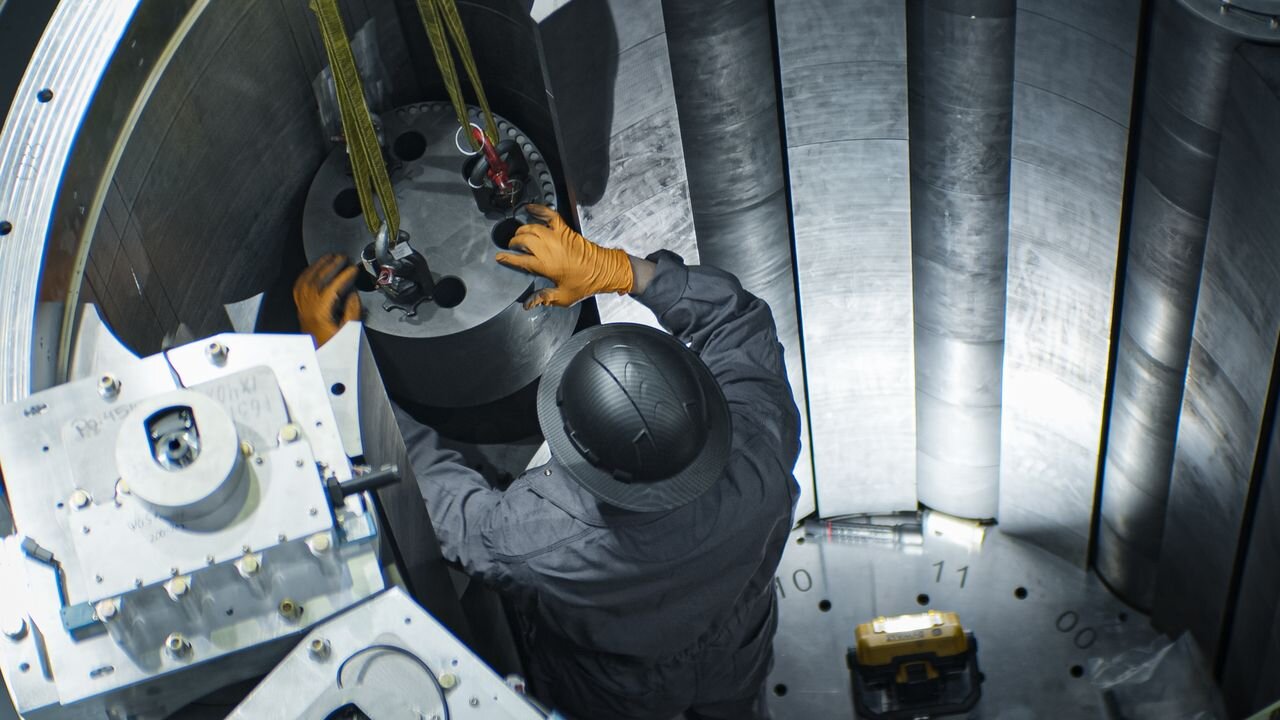
Antares' raise comes seven weeks after its Mark-0 microreactor reached criticality at Idaho National Laboratory under the Department of Energy's authorization in a demonstration run with the DOE, the lab, and BWX Technologies, with the US Army observing.
A direct beneficiary of the White House
Antares calls it the "first privately developed non-light-water reactor to achieve criticality in the United States in more than four decades," underscoring how important the test was for both Antares and the US military.
The US military's presence is not by chance; It is mandated by an executive order ("Deploying Advanced Nuclear Reactor Technologies for National Security") signed by US President Donald Trump to ensure that it has an operating army-regulated nuclear reactor on a domestic military site by September 30, 2028.
Antares happens to be one of three finalists in the Pentagon’s Advanced Nuclear Power for Installations program that aims to test-deploy a small module reactor (SMR) on two different air force bases.
With Antares being the first private company to go through that gate under the DOE's Reactor Pilot Program, it plans to build an electricity-producing Mark-1 reactor in 2027, followed by initial deployments to defense customers by 2028.
The Mark-1 uses the same full-scale core, facility, and TRISO fuel as the Mark-0, which is the company's argument for why the 2027 date is credible rather than aspirational.
Antares CEO Jordan Bramble says the reactor is being engineered to run reliably for six-plus years deployed without refueling, at an output the company, while noting that firm contracts to build reactors and the capital raised would allow the company to build "the first microreactor producing useful electricity in a truly commercially viable design."
The claim might hold for the US military, but insights from financial advisory firm Lazard suggest the approach is more expensive for now than all but the most expensive gas turbines in operation, with renewables clocking in considerably cheaper.
More importantly, the US supply chain for advanced reactors remains immature; no company has yet to manufacture microreactors at a production scale, and a first-of-a-kind electricity-producing reactor may reveal problems that a zero-power core does not currently exhibit.
Half a billion dollars in capital buys Antares a serious attempt at the deadline. Whether it manages to buy a reactor running on a US base in time to meet the executive order remains to be seen for now, even as it remains committed to trying.